




They are the same medicine. Tirzepatide is the active ingredient; Mounjaro is the brand name Eli Lilly gives it in the UK. This guide explains what tirzepatide is, how it works, what it is licensed to treat, and how it differs from semaglutide, the ingredient people most often mix it up with. Everything here is drawn from the UK Summary of Product Characteristics, NICE and the NHS.
Tirzepatide and Mounjaro: generic name and brand name
Every licensed medicine has two names. The generic name is the name of the active ingredient, agreed internationally, and it does not change between manufacturers. The brand name is the trademark the company markets it under. Tirzepatide is the generic name; Mounjaro is the brand 1. When you read about tirzepatide and Mounjaro, you are reading about one molecule.
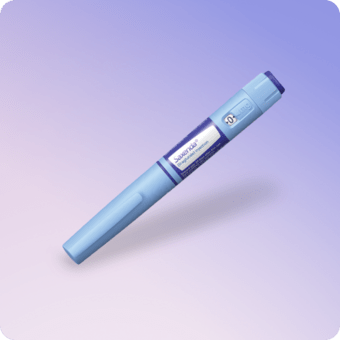
In the UK, Mounjaro comes as a pre-filled KwikPen, and each pen delivers a set strength of tirzepatide per dose, from 2.5 mg up to 15 mg 1. Each 0.6 ml dose of the 5 mg pen, for example, contains 5 mg of tirzepatide 1. The pens also contain a small amount of benzyl alcohol as an excipient, which the SmPC flags because it can rarely cause allergic reactions 5.
Tirzepatide is a prescription-only medicine in the UK, which means it can only be supplied after a clinician confirms it is appropriate for you 9. Knowing the generic name is useful for safety reasons too: it is how you check that what you are being offered is the genuine, UK-licensed product rather than something sold under a vague description.
How tirzepatide works in the body
Tirzepatide is a long-acting GIP and GLP-1 receptor agonist2. Those are two gut hormones: glucose-dependent insulinotropic polypeptide (GIP) and glucagon-like peptide-1 (GLP-1). Both are released when you eat, and both have receptors in the brain regions that control appetite 2. Tirzepatide switches on both receptors at once, which is the feature that sets it apart.
The practical effects are a reduction in hunger, an increase in the feeling of fullness, and fewer food cravings 2. The SmPC reports that in studies tirzepatide reduced overall appetite, with reduced hunger from the first week and increased satiety from around week three 2. It also delays the rate at which the stomach empties, which prolongs fullness after meals, an effect that is strongest at the start and eases over time 2.
It does more than curb appetite. In people with type 2 diabetes, tirzepatide improves blood sugar control by enhancing the body's own insulin response and reducing glucagon, a hormone that raises blood sugar 2. The SmPC describes it increasing the pancreas's sensitivity to glucose and enhancing insulin secretion in a glucose-dependent way, meaning it works with the body's own signals rather than forcing insulin out regardless 2. That glucose dependence is part of why, on its own, it carries a low risk of low blood sugar in people without diabetes 2.
If you want the underlying biology, our guide on how GLP-1 and GIP medications actually work goes into the incretin system in depth.
What tirzepatide is licensed to treat
Tirzepatide has two UK licences. The first is weight management in adults with a starting BMI of 30 kg/m2 or above, or 27 to under 30 kg/m2 with at least one weight-related condition such as high blood pressure, abnormal blood fats, sleep apnoea, cardiovascular disease, prediabetes or type 2 diabetes 3. The second is type 2 diabetes, where it is used to improve blood sugar control, often before insulin is considered 39.
In both licences the SmPC is explicit that tirzepatide is an adjunct to a reduced-calorie diet and increased physical activity, not a replacement for them 3. NICE takes the same line, positioning weight-loss medicines as one component of a plan that also includes diet, activity and clinical support 7. This framing matters, because the evidence and the licence both assume the lifestyle work continues alongside the injection.
For type 2 diabetes, the SmPC licenses tirzepatide as an add-on to diet and exercise, either on its own when metformin is unsuitable, or alongside other diabetes medicines 3. When it is combined with a sulphonylurea or insulin, the dose of those medicines may need reducing to lower the risk of low blood sugar 4. This is one of the clearest examples of why tirzepatide is prescribed and monitored rather than simply bought.
The licence is for adults only. Tirzepatide has not been studied in under-18s, and no data are available for that group 3. There is no need to adjust the dose for age, sex or body weight, and none for kidney or liver impairment, though experience in severe impairment is limited so caution applies 3.
Considering treatment for weight management? You can start an assessment with a Cloud Pharmacy clinician, who will review your medical history and confirm whether treatment is appropriate.
How tirzepatide differs from semaglutide
The medicine people most often confuse with tirzepatide is semaglutide, the active ingredient in Wegovy and Ozempic. The key difference is mechanism. Semaglutide is a GLP-1 receptor agonist, acting on one receptor 13. Tirzepatide acts on two, GIP and GLP-1 2. That is why tirzepatide is described as a dual agonist and semaglutide is not.
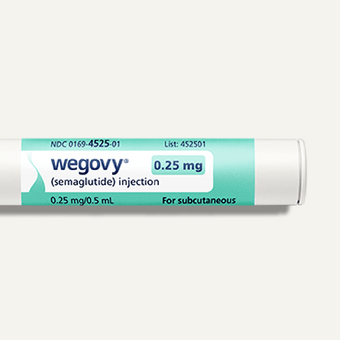
Brand names add another layer. The NHS lists semaglutide under the brands Wegovy (for obesity), Ozempic and Rybelsus (for type 2 diabetes) 13. In other words Wegovy is the semaglutide product licensed for weight management, while Ozempic and Rybelsus are for diabetes, so Ozempic should not be sought for weight loss. Mounjaro (tirzepatide) is licensed for both weight management and diabetes 3. NICE recommends semaglutide for NHS weight management only within a specialist service and for a maximum of two years 14, whereas tirzepatide can be used in primary care or specialist services 8. Our guide on Mounjaro versus Wegovy compares the two weight-loss options directly, and how Wegovy works covers semaglutide on its own.
There is also a format difference. Semaglutide comes as a weekly injection and, for diabetes, as a daily tablet (Rybelsus); tirzepatide is a weekly injection only 134. Choosing between them is a clinical decision, not a ranking. Each has its own SmPC, dosing schedule and side-effect profile, and the right option depends on your medical history and how you tolerate treatment. That is a conversation for a prescriber, not a headline.
| Tirzepatide | Semaglutide | |
|---|---|---|
| Receptors | GIP and GLP-1 (dual agonist) 2 | GLP-1 only 13 |
| Brand for weight management | Mounjaro 3 | Wegovy 13 |
| Brand for type 2 diabetes | Mounjaro 3 | Ozempic, Rybelsus 13 |
| Forms | Weekly injection 4 | Weekly injection; daily tablet for diabetes 13 |
| NHS weight-management route | Primary care or specialist service 8 | Specialist service, up to 2 years 14 |
The side effects of tirzepatide
Most people on tirzepatide get some side effects, and the most common are gastrointestinal: nausea, diarrhoea, vomiting, constipation and abdominal pain 6. In the weight management trials, nausea affected around 25 to 29 percent of people on tirzepatide compared with about 9 percent on placebo, and most reactions were mild or moderate, appeared during dose increases, and eased over time 6.
Less common but important effects include gallstones and gallbladder problems, and rarely acute pancreatitis6. The SmPC asks anyone with persistent, severe abdominal pain to seek immediate medical attention, because that can be a sign of pancreatitis 5. Other reported effects include injection site reactions, a small rise in heart rate, and hair loss, which in the trials affected 4.9 percent of people on treatment versus 1 percent on placebo and mostly recovered while treatment continued 6.
The NHS lists the same common side effects in patient language and advises speaking to a pharmacist or doctor about any that bother you or do not go away 9. Our full Mounjaro side effects guide covers what is normal and what is not, and our advice on managing nausea and constipation has practical tips for the early weeks.
How tirzepatide is prescribed and supplied in the UK
Tirzepatide is started low and increased in stages. The SmPC starting dose is 2.5 mg once weekly for four weeks, then 5 mg once weekly, with further increases of 2.5 mg possible after at least four weeks at a dose, up to a maximum of 15 mg 4. This slow titration is designed to reduce the gut side effects that are most common early on 4. Our Mounjaro dose guide sets out the schedule.
It is injected under the skin of the abdomen, thigh or upper arm, once a week, on the same day, at any time of day, with or without food 4. You can move your injection day if needed, as long as there are at least three days between doses 4. The NHS advises keeping the pen in the fridge until you are ready to use it 9.
You can get tirzepatide on the NHS if you meet the criteria for your nation, or privately on prescription from a registered pharmacy 9. NHS access is being introduced in phases and the rules differ between England, Scotland and Wales, which we cover in our complete Mounjaro guide. Whichever route you use, the NHS advises buying only from a registered pharmacy, because some websites sell fake weight-loss medicines 9.
Frequently asked questions
Is tirzepatide available as a tablet?
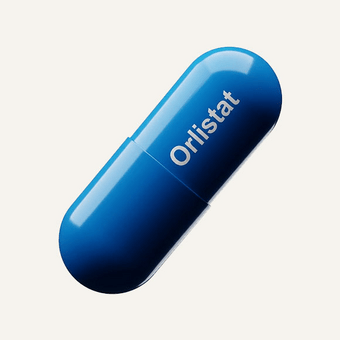
In the UK, tirzepatide is supplied as a once-weekly injection in a pre-filled KwikPen 1. There is no licensed tirzepatide tablet at present. Oral weight-loss medicines do exist, such as orlistat, but they are different drugs that work in different ways. If the format of treatment matters to you, that is worth raising with your prescriber, who can talk through the weight-loss treatments available.Is tirzepatide safe?
Tirzepatide is a licensed medicine with a well-documented safety profile, but no medicine is free of risk. The most common side effects are gastrointestinal, and rarer serious effects include acute pancreatitis, which the SmPC says needs immediate medical attention if you get persistent, severe abdominal pain 5. It is not suitable for everyone, which is why it is prescription-only and assessed individually 9.Why does tirzepatide have two names?
All medicines have a generic name for the active ingredient and a brand name for the marketed product. Tirzepatide is the generic name and Mounjaro is the brand 1. The generic name is the same worldwide, while brand names can differ by country and manufacturer. Knowing both helps you confirm you are getting the genuine, UK-licensed product.Can I use tirzepatide if I do not have diabetes?
Yes, tirzepatide is separately licensed for weight management in adults who meet the BMI criteria, regardless of whether they have diabetes 3. The hypoglycaemia risk that applies to the diabetes indication is mainly relevant when tirzepatide is combined with a sulphonylurea or insulin 5. A prescriber assesses which licence applies to your situation.Your next step
Tirzepatide and Mounjaro are the same medicine under two names, and understanding that removes a lot of the confusion around it. It is a dual-receptor injection, licensed for weight management and type 2 diabetes, prescription-only, and distinct from semaglutide.
If you are considering tirzepatide, speak to your GP or pharmacist, or start a consultation with a clinician who can check whether it is appropriate for your medical history and explain how to access it where you live. Always make sure any supply comes from a registered pharmacy.
Disclaimer
This guide is for general information only and does not constitute medical advice, diagnosis or treatment. The information here describes general clinical context based on UK regulatory sources cited above; it is not a recommendation for any specific medicine or treatment, which can only be made by a prescriber following individual assessment.
If you are considering treatment, speak to your GP or pharmacist, or arrange a consultation with a Cloud Pharmacy clinician. Prescription-only medicines are issued only after clinical assessment and where appropriate.
If you experience side effects from any medicine, you can report them through the Yellow Card scheme at yellowcard.mhra.gov.uk.