





This guide sets out the Wegovy dose escalation week by week, from the 0.25 mg start to the 2.4 mg maintenance dose, why it is done this way, and what to do about missed doses and side effects. It draws on the UK Summary of Product Characteristics and the NHS, and it pairs with our explainer on the 2.4 mg maintenance dose.
The Wegovy dose schedule at a glance
Wegovy (semaglutide) for weight management is reached through a 16-week dose escalation that starts at 0.25 mg once weekly and climbs in steps to the 2.4 mg maintenance dose 1. The 0.25 mg start is a starting dose, not a treatment dose; the 2.4 mg dose is the target the schedule builds up to 1.
The table below sets out the standard schedule from the SmPC, with four weeks at each step before increasing 1.
The principle is the same as with other GLP-1 medicines: start low, go slow, and let the body adjust at each step before increasing 1.
| Period | Weekly dose |
|---|---|
| Weeks 1 to 4 | 0.25 mg |
| Weeks 5 to 8 | 0.5 mg |
| Weeks 9 to 12 | 1 mg |
| Weeks 13 to 16 | 1.7 mg |
| From week 17 (maintenance) | 2.4 mg |
| Optional, if needed | 7.2 mg, after at least 4 weeks on 2.4 mg 1 |
Why you start low and step up
The escalation exists to reduce gastrointestinal symptoms. The SmPC is explicit that the dose should be escalated over the 16-week period to reduce the likelihood of gut side effects such as nausea, which are most frequently reported during dose escalation 1. Starting at the full dose would make these much more likely.
So the lower-strength steps are not weaker versions of the treatment to be rushed through; they are the rungs that let your stomach and gut adjust as the dose climbs 1. The NHS describes semaglutide as being increased gradually for the same reason 3.
This is why patience through the early steps pays off: giving each step its time reduces the chance of side effects bad enough to interrupt treatment 1.
It also reframes how to think about the lower-strength weeks. It can be tempting to see 0.25 mg or 0.5 mg as not yet the real treatment and to want to rush to 2.4 mg, but the schedule is designed precisely so that the gut adapts at each level before the next increase 1. Reaching the maintenance dose comfortably, rather than as fast as possible, is the point of the escalation, and skipping steps would simply make side effects more likely 1.
Week by week through the escalation
For weeks 1 to 4 you take 0.25 mg once weekly, the starting dose that begins the process while keeping side effects low 1. For weeks 5 to 8 the dose rises to 0.5 mg, and for weeks 9 to 12 to 1 mg1.
For weeks 13 to 16 the dose is 1.7 mg, the last step before maintenance 1. From week 17 you reach the 2.4 mg maintenance dose, which is the target dose the schedule is designed to build up to 1.
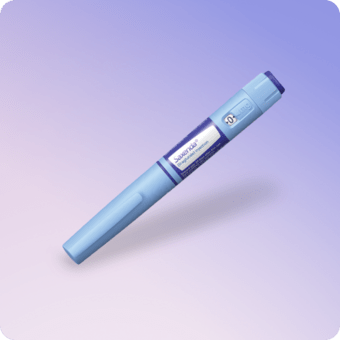
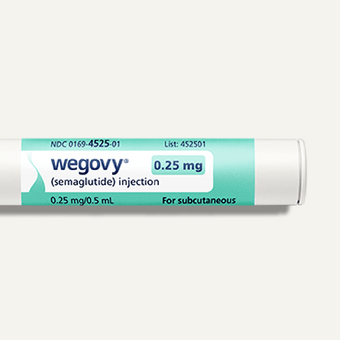
Each strength has its own pen, so moving up a step means a different pen rather than more injections 1. Our guide on the 2.4 mg maintenance dose explains the destination of the schedule in more detail.
It is worth noting that the schedule is a standard plan rather than a rigid rule that cannot flex. If side effects are troublesome at a step, the SmPC allows delaying an increase or going back to the previous dose until symptoms improve, which the later section covers 1. So while the 16-week schedule is the default path to 2.4 mg, the pace can be adjusted with your prescriber to keep treatment tolerable 1.
Considering treatment for weight management? You can start an assessment with a Cloud Pharmacy clinician, who will review your medical history and confirm whether treatment is appropriate.
Reaching 2.4 mg and the optional 7.2 mg dose
The 2.4 mg dose from week 17 is the standard maintenance dose for weight management, the dose most people mean when they talk about being on Wegovy 1. It is where the schedule settles rather than another step on the way up 1.
For weight management in people with obesity, the SmPC allows the dose to be increased if needed to 7.2 mg once weekly, given as three injections of 2.4 mg, after a minimum of four weeks on the 2.4 mg dose 1. For the 7.2 mg dose, the three injections can be in the same body area but at least 5 cm apart, with the needle changed between each 1.
So 2.4 mg is the maintenance dose for most people, and 7.2 mg is an optional higher dose for defined circumstances, reached only after time on 2.4 mg 1. Doses above the recommended maintenance are not something to aim for by default 1.
It is worth being clear that a higher dose is not automatically a better one. The 7.2 mg option exists for weight management in people with obesity if needed, not as a target everyone should climb to, and it is reached only after at least four weeks on 2.4 mg and with a prescriber's decision 1. For many people the 2.4 mg maintenance dose is where treatment settles, and whether a higher dose is appropriate is an individual clinical judgement rather than a default next step 1.
If you have side effects during dose increases
Because gut side effects are most likely during escalation, the SmPC builds in flexibility. In the case of significant gastrointestinal symptoms, it advises considering delaying the dose increase or lowering to the previous dose until symptoms have improved 1. So a difficult step does not have to mean stopping.
This is a decision to make with your prescriber rather than alone, but it means the schedule can be paced to your tolerance 1. The NHS also advises speaking to a pharmacist or doctor about side effects that bother you or do not go away, rather than stopping the medicine yourself 3.
Our guide on managing nausea and the other gut effects covers the practical measures that help you through the escalation 3.
Missed doses, your injection day and the six-month review
Wegovy is injected once weekly at any time of day, with or without food, in the abdomen, thigh or upper arm, and the injection site can be changed 2. You can change your weekly day if needed, as long as there are at least three days (more than 72 hours) between doses 2.
If you miss a dose, take it as soon as possible within five days of the missed dose; if more than five days have passed, skip it and take the next dose on your scheduled day, then resume weekly dosing 2. If several doses are missed, the SmPC advises considering reducing the starting dose for re-initiation, which is a prescriber decision 2.
There is also a six-month review built into treatment: if at least 5 percent of starting body weight has not been lost after six months, a decision is made on whether to continue, weighing the benefit and risk for the individual 1. So the schedule sits within a wider plan that is reviewed, not an open-ended escalation 1.
Taken together, these practical rules mean the schedule is more flexible and forgiving than it might first appear. You are not locked to a single fixed day or a rigid timetable: the day can move within the three-day minimum, a missed dose has a clear five-day rule, and a difficult step can be paced more slowly 12. What stays constant is the overall shape, a gradual build to a reviewed maintenance dose, which is the part worth keeping in view as you work through the weeks 1.
Frequently asked questions
What is the Wegovy dose schedule?
Wegovy is escalated over 16 weeks: 0.25 mg for weeks 1 to 4, then 0.5 mg, then 1 mg, then 1.7 mg, reaching the 2.4 mg maintenance dose from week 17 1. A higher 7.2 mg dose can be used if needed after at least four weeks on 2.4 mg 1. The steps exist to reduce gastrointestinal side effects 1.Why does Wegovy start at 0.25 mg?
To reduce the likelihood of gastrointestinal symptoms such as nausea, which are most frequently reported during dose escalation 1. The 0.25 mg start is a starting dose, not a treatment dose; it lets the gut adjust before the dose climbs to the 2.4 mg maintenance dose 1. The NHS describes semaglutide being increased gradually for the same reason 3.How long until I reach the full 2.4 mg Wegovy dose?
Sixteen weeks on the standard schedule, with four weeks at each step, reaching the 2.4 mg maintenance dose from week 17 1. If side effects are troublesome, the SmPC allows delaying an increase or stepping back to the previous dose until symptoms improve, so the pace can be adjusted with your prescriber 1.What if I get side effects during Wegovy dose increases?
The SmPC advises considering delaying the dose increase or lowering to the previous dose until significant gastrointestinal symptoms improve, so a difficult step need not mean stopping 1. This is a decision with your prescriber. The NHS advises speaking to a pharmacist or doctor about side effects rather than stopping the medicine yourself 3.What happens if I miss a Wegovy dose?
Take it as soon as possible within five days of the missed dose; if more than five days have passed, skip it and take the next dose on your scheduled day, then resume weekly dosing 2. If several doses are missed, the SmPC advises considering reducing the starting dose for re-initiation, which is a prescriber decision 2.What is the Wegovy 7.2 mg dose?
It is an optional higher dose for weight management in people with obesity, used if needed after a minimum of four weeks on the 2.4 mg dose, given as three injections of 2.4 mg at least 5 cm apart with the needle changed between each 1. The 2.4 mg dose remains the standard maintenance dose for most people 1.Your next step
Wegovy is built up over a 16-week escalation: 0.25 mg for weeks 1 to 4, then 0.5 mg, 1 mg and 1.7 mg, reaching the 2.4 mg maintenance dose from week 17, with a higher 7.2 mg dose available if needed after at least four weeks on 2.4 mg. The slow build is to reduce gastrointestinal side effects, and the pace can be adjusted if a step is difficult.
Inject once weekly at any time of day, change your day only if doses stay at least three days apart, and follow the five-day missed-dose rule. Speak to your prescriber if side effects make a step hard, and remember treatment is reviewed at six months against a 5 percent weight-loss marker. The overall shape to keep in mind is simple: a gradual build to a reviewed maintenance dose, paced to your tolerance rather than rushed.
Disclaimer
This guide is for general information only and does not constitute medical advice, diagnosis or treatment. The information here describes general clinical context based on UK regulatory sources cited above; it is not a recommendation for any specific medicine or treatment, which can only be made by a prescriber following individual assessment.
If you are considering treatment, speak to your GP or pharmacist, or arrange a consultation with a Cloud Pharmacy clinician. Prescription-only medicines are issued only after clinical assessment and where appropriate.
If you experience side effects from any medicine, you can report them through the Yellow Card scheme at yellowcard.mhra.gov.uk.