





This guide explains whether there is a time limit on Mounjaro, the six-month checkpoint NICE uses, what long-term use involves, and what happens when you stop. It draws on NICE, the NHS and the UK Summary of Product Characteristics, and it pairs with our guide on coming off Mounjaro.
Is there a set time limit on Mounjaro?
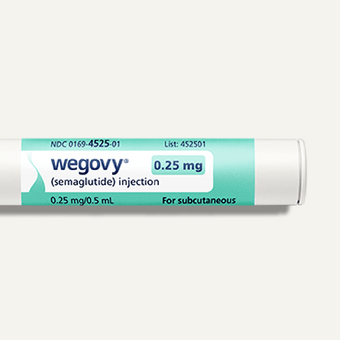
For weight management, the SmPC does not set a fixed maximum duration for tirzepatide 2. This is different from semaglutide (Wegovy), which NICE recommends on the NHS for a maximum of two years within a specialist service 4. So there is no equivalent two-year cap written into how Mounjaro is used for weight management 24.
Instead of a fixed limit, the framework is one of ongoing review, anchored to whether the medicine is working for you 1. The key checkpoint, covered next, is at six months, and beyond that the question is reviewed rather than capped at a set date 1.
So the answer to is there a time limit is: not a fixed one for weight management, but treatment is meant to be reviewed, not simply continued indefinitely without checking it is still doing its job 1.
The six-month checkpoint
The clearest milestone is the six-month checkpoint. NICE and the SmPC both use it: if less than 5 percent of your starting weight has been lost after six months on the highest tolerated dose, the prescriber decides whether to continue, taking into account the benefits and risks for you 12.
This is the point at which how long you stay on it is first formally judged. If you have lost at least 5 percent, treatment is working as intended and continuing is reasonable; if not, the value of carrying on is reviewed 1. It is a checkpoint, not an automatic stop, but it is the structured moment to assess progress 1.
It also sets a sensible expectation about timeframes: the question of how long is not really answered in the first weeks but at this six-month review and in the reviews that follow 1. Our guide on how long Mounjaro takes to work covers the run-up to this checkpoint.
The 5 percent figure is a threshold for deciding whether treatment is working, not a target you have to hit or a promise of a specific result 1. Some people lose considerably more, others less, and the checkpoint simply gives a structured point to review whether continuing is worthwhile for you, taking benefits and risks together 1. Framing it as a review point rather than a pass-or-fail test is the more useful way to hold it 1.
Long-term use and ongoing review
If treatment is working and tolerated, Mounjaro can be continued long term for weight management, with ongoing review rather than a fixed end date 12. The trial evidence supports sustained effect: in studies, the clinical effects were maintained over time, for up to two years in one diabetes study 3.
Long-term use is meant to be reviewed periodically, weighing continued benefit against any emerging issues, rather than set and forgotten 1. Treatment also continues to be framed as an adjunct to diet, activity and clinical support, so the lifestyle side runs alongside it throughout 5.
Because tirzepatide is a relatively new medicine, very long-term data is still accumulating through monitoring, which is one reason ongoing review matters 3. Our guide on Mounjaro long-term side effects covers what is known about extended use.
It helps to see the review as a recurring conversation rather than a one-off decision. At each review, the questions are whether the medicine is still working, whether you are tolerating it, and whether anything in your circumstances has changed, weighed against the lifestyle changes you are maintaining 15. That framing is more useful than fixating on a target number of months, because the right duration genuinely differs from person to person 1.
Considering treatment for weight management? You can start an assessment with a Cloud Pharmacy clinician, who will review your medical history and confirm whether treatment is appropriate.
The diabetes picture
If you take Mounjaro for type 2 diabetes rather than weight management, the duration question is different. There is no fixed stopping point; it is generally continued while it helps control blood sugar and is tolerated, with ongoing review by your diabetes team 26.
The weight-management six-month, 5 percent checkpoint is specific to the weight-management use and does not apply in the same way to the diabetes indication 1. For diabetes, the judgement is about blood-sugar control over time, made with your diabetes team 6.
Either way, the NHS advises not stopping suddenly, and for diabetes notes that stopping can affect your blood sugar 6. So duration in the diabetes setting is an ongoing clinical decision, not a fixed course 6.
There is also a practical overlap worth noting for people who take Mounjaro for diabetes and have lost weight on it. The weight reduction itself can improve blood-sugar control, so the duration conversation in diabetes is really about overall metabolic control over time, managed by your diabetes team, rather than a weight target on its own 36. That is a different framing from the weight-management six-month checkpoint, even though the medicine and dosing are the same 1.
What happens when you stop
How long you stay on Mounjaro is closely tied to what happens when you stop. Because the medicine reduces appetite while you take it, appetite tends to return when you stop, and weight regain is common3. This is part of why the duration decision matters: stopping is not consequence-free 3.
The NHS advises not stopping suddenly and talking to your doctor first, and a doctor may suggest reducing the dose gradually 6. Our guide on why weight regain happens after stopping covers how to minimise it, and our coming-off guide covers the practical step-down.
So the realistic picture is that Mounjaro tends to work while you take it, with the benefit depending on continued use plus maintained lifestyle changes 35. That is the backdrop to deciding how long to stay on it 1.
This is not a reason to feel locked in. It is simply the reality that the medicine reduces appetite while you take it and that appetite returns when you stop, which is why the lifestyle changes built alongside treatment do the lasting work 35. Understanding that helps you approach the duration question with realistic expectations: the medicine is a tool you may use for a while, and the habits are what carry on afterwards 5.
Deciding how long to stay on
Pulling it together, how long you stay on Mounjaro is a clinical decision reviewed over time, not a fixed course 1. The six-month checkpoint is the first formal review; beyond that, continued use depends on whether it is still working, still tolerated, and still appropriate for you, weighed against the lifestyle changes you are maintaining 15.
Useful things to discuss with your prescriber are how you are responding, how you are tolerating it, your plan for maintaining changes, and, if you are thinking about stopping, how to do so safely given the risk of regain 16. There is no obligation to stay on it indefinitely, nor a fixed point at which you must stop for weight management 2.
If your circumstances change, for example if you are planning a pregnancy, that changes the picture, since Mounjaro must not be used in pregnancy and should be stopped in advance 2. The duration decision is best revisited periodically with your prescriber rather than fixed once 1.
A useful way to hold the whole question is that how long you stay on Mounjaro is really two linked decisions: whether to continue, judged at each review against benefit and tolerance, and how to stop well when the time comes, given that appetite returns and weight regain is common 13. Neither is a fixed rule. Our guide on coming off Mounjaro covers the stopping side, and this duration decision sits alongside it 1.
Frequently asked questions
Is there a time limit on Mounjaro?
Not a fixed one for weight management in the SmPC, unlike Wegovy, which NICE caps on the NHS at two years 24. Instead, NICE uses a six-month checkpoint: if less than 5 percent of starting weight is lost on the highest tolerated dose, the prescriber decides whether to continue 1. Treatment is reviewed over time rather than capped at a set date 1.How long can you stay on Mounjaro for weight loss?
There is no fixed maximum for weight management; it can be continued long term while it works and is tolerated, with ongoing review 12. The first formal review is the six-month, 5 percent checkpoint 1. Because appetite returns and weight regain is common on stopping, the duration decision is made with your prescriber over time 3.How long do you stay on Mounjaro for diabetes?
There is no fixed stopping point for the diabetes indication; it is generally continued while it helps control blood sugar and is tolerated, with ongoing review by your diabetes team 62. The weight-management six-month checkpoint does not apply in the same way 1. The NHS advises not stopping suddenly, as it can affect blood sugar 6.What happens if I stay on Mounjaro long term?
If it is working and tolerated, Mounjaro can be continued long term with ongoing review 1. Trial effects were sustained over time, up to two years in one study 3. Because it is a newer medicine, very long-term data is still accumulating, which is one reason review matters 3. Our long-term side effects guide covers extended use 3.Should I stop Mounjaro once I reach my goal weight?
That is a decision to make with your prescriber, because appetite returns and weight regain is common after stopping 3. The NHS advises not stopping suddenly and talking to your doctor first, who may suggest reducing the dose gradually 6. Maintaining diet and activity changes gives the best chance of holding progress if you do stop 5.Does Mounjaro have to be taken forever?
No. There is no fixed requirement to stay on it indefinitely for weight management, nor a fixed point at which you must stop 2. It is reviewed over time, continued while it works and is tolerated, and the decision to stop is made with a prescriber 1. Because appetite returns and weight regain is common on stopping, that decision weighs how you will maintain progress 3.Your next step
There is no fixed time limit on Mounjaro for weight management, unlike Wegovy's two-year NHS cap. The structure is a six-month, 5 percent checkpoint followed by ongoing review, with treatment continued while it works and is tolerated. Appetite returns and weight regain is common when you stop, which is part of why duration is a considered decision.
Discuss how long to stay on Mounjaro with your prescriber at the six-month checkpoint and in later reviews, weighing your response, tolerance and the lifestyle changes you are maintaining. If you are thinking about stopping, plan it rather than stopping suddenly, especially if you have diabetes, and use our coming-off guide alongside this one to do it safely. The honest summary is that there is no single right length of time; it is a decision you revisit with your prescriber as your response, tolerance and circumstances change over time, with the six-month checkpoint as the first formal point of review along the way.
Disclaimer
This guide is for general information only and does not constitute medical advice, diagnosis or treatment. The information here describes general clinical context based on UK regulatory sources cited above; it is not a recommendation for any specific medicine or treatment, which can only be made by a prescriber following individual assessment.
If you are considering treatment, speak to your GP or pharmacist, or arrange a consultation with a Cloud Pharmacy clinician. Prescription-only medicines are issued only after clinical assessment and where appropriate.
If you experience side effects from any medicine, you can report them through the Yellow Card scheme at yellowcard.mhra.gov.uk.