





This guide explains what Xenical is, how orlistat blocks fat absorption, who it is licensed for, how it is taken, its side effects and the key precautions including fat-soluble vitamins. It draws on the UK Summary of Product Characteristics. It is general information; whether Xenical is suitable for you is a decision for your prescriber.
What is Xenical?
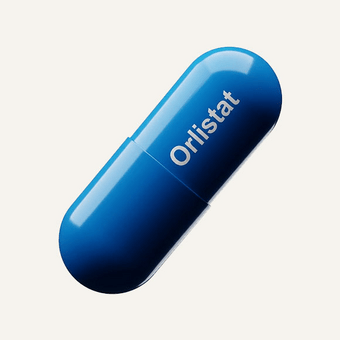
Xenical is a hard capsule containing 120 mg of orlistat, a prescription weight-loss medicine 1. Orlistat is also available over the counter at a lower 60 mg strength (sold as alli), but Xenical is the higher, prescription-strength version 1.
It is licensed in conjunction with a mildly hypocaloric (reduced-calorie) diet for the treatment of obesity, so, like the other weight-loss medicines, it is an adjunct to dietary change rather than a standalone fix 1. The next section explains its distinctive mechanism 1.
Unlike the appetite-reducing injections, orlistat works locally in the gut and is barely absorbed into the body, which shapes both how it helps and the kind of side effects it causes 1.
Orlistat has been available for many years, which makes it a long-established option with a well-characterised profile 1. It is generally more modest in its effect than the newer injectable medicines, but it works in a completely different way and does not involve an injection or act on appetite, which is why it remains a relevant choice for some people 1. Understanding what it is and is not, an oral, gut-acting fat-blocker rather than an appetite medicine, is the key to having realistic expectations of it 1.
How orlistat works
Orlistat is a lipase inhibitor. It works in the stomach and small intestine by blocking the action of the lipase enzymes that normally break down dietary fat (triglycerides) into absorbable components 1. With those enzymes inactivated, some of the fat you eat passes through undigested rather than being absorbed 1.
This means orlistat reduces the calories your body takes in from fat, which supports weight loss when combined with a reduced-calorie diet 1. The effect on faecal fat appears within a day or two of starting and reverses within a few days of stopping 1.
Because it acts only on fat in the gut, the medicine's benefit and its side effects both depend heavily on how much fat is in your diet, which is why the dietary advice below matters so much 1.
This gut-only action is also why orlistat is barely absorbed into the bloodstream 1. Studies show only minimal amounts reach the circulation, with the unabsorbed medicine passing out in the stool, which is unusual among weight-loss medicines and means orlistat does not act on the brain or appetite the way the injections do 1. It works mechanically on the fat in your food rather than on how hungry you feel, a genuinely different approach that some people find suits them and others do not 1.
Who Xenical is licensed for
Xenical is licensed for obese patients with a BMI of 30 or above, or overweight patients with a BMI of 28 or above who have associated risk factors, in conjunction with a mildly reduced-calorie diet 1. So it covers a slightly broader overweight group (from BMI 28) than some other options 1.
Treatment should be discontinued after 12 weeks if you have not lost at least 5 percent of your body weight from the start of therapy 1. So, as with the other weight-loss medicines, there is an early checkpoint to confirm it is working 1.
It is recommended alongside a nutritionally balanced, mildly reduced-calorie diet with about 30 percent of calories from fat, rich in fruit and vegetables, with fat spread across three main meals 1. The diet is integral, not optional 1. Because orlistat only acts on dietary fat, the diet is both how the medicine produces its benefit and how you keep its side effects manageable, so the two genuinely work together 1.
Considering treatment for weight management? You can start an assessment with a Cloud Pharmacy clinician, who will review your medical history and confirm whether treatment is appropriate.
How Xenical is taken
The dose is one 120 mg capsule taken with water immediately before, during, or up to one hour after each main meal1. So it is taken with meals, typically three times a day 1.
Importantly, if a meal is missed or contains no fat, the dose should be omitted, because orlistat only acts on dietary fat and is not needed without it 1. Taking more than 120 mg three times daily provides no additional benefit 1.
The medicine is meant to accompany the reduced-fat diet described above; taking it with very high-fat meals increases the gastrointestinal side effects, covered next 1. Our guide on alli covers the over-the-counter 60 mg version 1.
There is a useful behavioural angle to the way orlistat works 1. Because the fat-related side effects are worse after high-fat meals, the medicine effectively gives immediate, tangible feedback when you eat too much fat, which some people find helps them stick to the lower-fat diet it is meant to accompany 1. Whether you see that as a helpful nudge or an unpleasant deterrent is personal, but it explains why orlistat and a reduced-fat diet really go hand in hand rather than the diet being an optional extra 1.
Side effects and the vitamin point
Orlistat's side effects are largely gastrointestinal and directly related to the unabsorbed fat1. Very common effects include oily spotting from the rectum, flatus with discharge, faecal urgency, fatty or oily stools, flatulence and liquid stools, alongside abdominal pain and headache 1. These tend to be worse with higher-fat meals and decrease with prolonged use 1.
Because orlistat reduces fat absorption, it can also impair the absorption of the fat-soluble vitamins A, D, E and K, so a multivitamin supplement is often advised, taken at least two hours after orlistat or at bedtime 1. This is a practical, recognised precaution 1.
Rarer issues to be aware of include rectal bleeding (which should be investigated), and very rarely oxalate kidney problems, gallstones, and serious liver problems, so persistent or severe symptoms should be checked 1. Most people, though, experience the manageable, fat-related gut effects 1.
The single most useful thing to know about managing orlistat's side effects is that they are largely within your control through diet1. Because they come from unabsorbed fat, sticking to the recommended lower-fat meals keeps them mild, while a high-fat meal predictably makes them worse 1. So the gut effects are not random; they track the fat content of what you eat, and the reduced-fat diet that the medicine is meant to accompany is also the main way to keep them comfortable 1.
Precautions and interactions
Xenical is contraindicated in people with chronic malabsorption syndrome or cholestasis, in breastfeeding, and in anyone hypersensitive to it 1. Caution is needed in diabetes (antidiabetic treatment may need monitoring as weight changes) 1.
There are several interactions to flag to your prescriber: orlistat can affect anticoagulants (so INR is monitored), may reduce absorption of levothyroxine and antiepileptic medicines, and can affect ciclosporin and HIV antiretrovirals1. An additional contraceptive method is advised if severe diarrhoea occurs, since that could reduce the pill's effectiveness 1.
So while orlistat is barely absorbed and acts locally, its effect on fat absorption has knock-on effects for some other medicines and nutrients, which is why your full medicine list matters 1. Our guide on how to choose a weight-loss treatment sets it alongside the other options 1.
It is worth putting orlistat's place in context 1. It is a longer-established and more modestly effective option than the newer GLP-1 injections, working in a completely different way, and it suits some people and situations better than others, for instance where an injection is not wanted or appropriate 1. The 12-week 5 percent checkpoint is the practical way to find out whether it is working for you, and if it is not, that is the point to reconsider with your prescriber rather than persisting indefinitely on a treatment that is not delivering 1.
Frequently asked questions
What is Xenical?
Xenical is prescription orlistat 120 mg, a capsule taken with meals for weight management alongside a reduced-calorie, lower-fat diet, licensed for a BMI of 30+, or 28+ with risk factors 1. Orlistat is also sold over the counter at a lower 60 mg strength as alli 1.How does Xenical (orlistat) work?
Orlistat is a lipase inhibitor: it blocks the gut enzymes that digest dietary fat, so some of the fat you eat passes through undigested rather than being absorbed, reducing calorie intake from fat 1. It acts locally in the gut and is barely absorbed into the body 1.How do you take Xenical?
One 120 mg capsule with water immediately before, during or up to one hour after each main meal, usually three times a day 1. If a meal is missed or has no fat, the dose is omitted, and doses above 120 mg three times daily give no extra benefit 1. It is taken with a reduced-fat diet 1.What are the side effects of Xenical?
Mainly gastrointestinal and fat-related: oily spotting, flatus with discharge, faecal urgency, fatty or oily stools, flatulence and liquid stools, plus abdominal pain and headache 1. They are worse with high-fat meals and ease with time. A multivitamin is advised because orlistat can reduce absorption of vitamins A, D, E and K 1.Who should not take Xenical?
It is contraindicated in chronic malabsorption syndrome, cholestasis, breastfeeding and hypersensitivity, and caution is needed in diabetes 1. It also interacts with anticoagulants, levothyroxine, antiepileptics, ciclosporin and HIV medicines, so tell your prescriber your full medicine list 1.Do I need to take a vitamin supplement with Xenical?
Often, yes. Because orlistat reduces fat absorption, it can impair absorption of the fat-soluble vitamins A, D, E and K, so a multivitamin supplement is commonly advised, taken at least two hours after orlistat or at bedtime 1. Your prescriber or pharmacist can advise 1.Your next step
Xenical is prescription orlistat 120 mg, a capsule taken with meals that works in the gut by blocking the enzymes that digest dietary fat, so some fat passes through undigested. It is licensed for a BMI of 30+, or 28+ with risk factors, alongside a mildly reduced-calorie, lower-fat diet, and is stopped at 12 weeks if less than 5 percent of weight is lost. Its side effects are mainly gastrointestinal and fat-related.
Take one capsule with each main meal, omit the dose if a meal is fatless or missed, follow the reduced-fat diet, and consider a multivitamin because orlistat can reduce absorption of vitamins A, D, E and K. Tell your prescriber your full medicine list given the interactions, and discuss whether orlistat or another option suits you. The fat-related gut effects are largely within your control through diet, so a lower-fat diet keeps them mild and is the same diet the medicine is meant to accompany, making the two genuinely work together rather than the medicine being expected to do the job on its own without the dietary changes alongside it doing their part, and the 12-week 5 percent checkpoint tells you whether it is working for you. If you have not reached that threshold by the review point, that is useful information rather than a personal failure, and your prescriber can talk you through whether a different approach or medicine is likely to suit you better than continuing on one that is not delivering for you.
Disclaimer
This guide is for general information only and does not constitute medical advice, diagnosis or treatment. The information here describes general clinical context based on UK regulatory sources cited above; it is not a recommendation for any specific medicine or treatment, which can only be made by a prescriber following individual assessment.
If you are considering treatment, speak to your GP or pharmacist, or arrange a consultation with a Cloud Pharmacy clinician. Prescription-only medicines are issued only after clinical assessment and where appropriate.
If you experience side effects from any medicine, you can report them through the Yellow Card scheme at yellowcard.mhra.gov.uk.