





This guide takes an honest look at weight-loss pills in the UK: what is actually licensed, how the main option works, why most slimming supplements are a different thing entirely, and how pills compare with the injections in the news. It draws on the NHS, NICE and the UK Summary of Product Characteristics, and it is careful not to promise more than the evidence supports.
What people mean by weight loss pills
The phrase weight-loss pill covers several very different things, and lumping them together is where people get caught out. There are licensed prescription medicines, licensed pharmacy medicines, and a large market of unlicensed slimming supplements sold as capsules, teas and powders. Only the first two are medicines that have been assessed and authorised for weight management 1.
In the UK the licensed oral medicine you are most likely to be offered is orlistat1. The injections that dominate the headlines, the GLP-1 medicines, are not pills at all, a point we return to below 6. Almost everything else marketed as a slimming pill is a supplement rather than a medicine.
This distinction matters because supplements are not held to the same standard of evidence or safety as licensed medicines, and the claims made for them are often not supported. The rest of this guide focuses on what the evidence actually shows.
There is an emotional layer to this topic that is worth naming. People searching for a weight-loss pill are often frustrated, sometimes after years of trying, and that is precisely the audience the more aggressive marketing targets. The most respectful thing this guide can do is be straight with you: there is one main licensed pill, its effect is modest and real, and the products promising dramatic, effortless results are the ones to be most wary of 16.
The one main licensed weight loss pill: orlistat
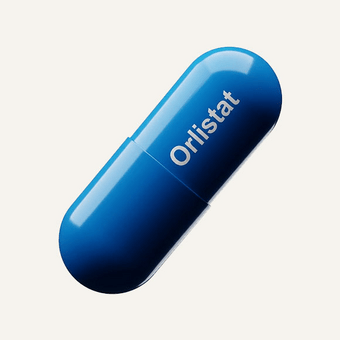
Orlistat is the licensed weight-loss pill with a clear UK evidence base. It works in the gut, blocking the enzymes that digest fat so that about a third of the fat in your food passes through rather than being absorbed 1. It is taken as a capsule with main meals, up to three times a day, alongside a reduced-calorie diet 3.
The weight loss it produces is real but modest. In pooled trials, 37 percent of people on orlistat lost at least 5 percent of their body weight by 12 weeks, against 19 percent on placebo, and the average difference from placebo at one year was about 3.2 kg 2. Because the effect is modest, both the SmPC and the NHS advise stopping if you have not lost at least 5 percent of your body weight after 12 weeks 34.
Orlistat's side effects also follow from how it works. Because it leaves fat undigested, the common effects are gastrointestinal: oily or fatty stools, urgent or more frequent bowel movements, and wind with oily spotting, which are less likely if you keep to a balanced, lower-fat diet 8. It is not suitable for everyone, with contraindications including certain liver and bowel conditions and breastfeeding, which is why a pharmacist or prescriber checks it suits you 1.
Setting that expectation honestly matters. Orlistat is a useful, evidence-based option for the right person, used with a real change in diet. It is not a dramatic transformation in a bottle, and any product promising that should raise your suspicion rather than your hopes.
Prescription pills, pharmacy pills and supplements
It helps to know which category a product falls into. Prescription pills like Xenical (orlistat 120 mg) are supplied after a clinical assessment, on the NHS where you meet the criteria or privately 1. Pharmacy pills like Alli and Orlos are lower-dose orlistat you can buy from a pharmacy after a conversation with the pharmacist 1.
Supplements are the third category, and the largest by volume online. They are not licensed medicines, are not assessed to the same standard, and the weight-loss claims made for them are frequently unsupported. The NHS is clear that some websites sell fake weight-loss medicines, and advises buying only from a registered pharmacy 6.
A simple test cuts through most of it: is the product a licensed UK medicine for weight management, supplied by a registered pharmacy after an assessment of whether it suits you? If the answer is no, it is not in the same category as orlistat, whatever the packaging implies.
Considering treatment for weight management? You can start an assessment with a Cloud Pharmacy clinician, who will review your medical history and confirm whether treatment is appropriate.
Why natural and herbal slimming pills are a different thing
A common marketing line is that a supplement is a natural version of a prescription medicine, sometimes phrased as a natural alternative to the well-known injections. These claims imply an equivalence that does not exist. A supplement that has not been licensed as a medicine has not been shown to work like one, and presenting it as a substitute can discourage people from seeking proper assessment 6.
Words like natural, herbal or chemical-free do not mean safe or effective. Some supplements interact with medicines or carry their own risks, and because they are not regulated as medicines, what is in the packet is not always what the label says. The NHS warning about fake weight-loss medicines sold online applies squarely here 6.
If a product claims to give you the effect of a prescription weight-loss medicine without a prescription, treat that as a reason for caution. Licensed medicines for weight management are prescription-only or pharmacy-supervised precisely because they need clinical oversight 1.
Pills versus injections: what the difference means
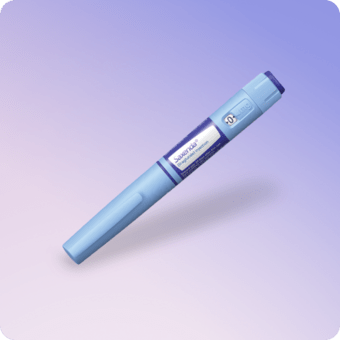
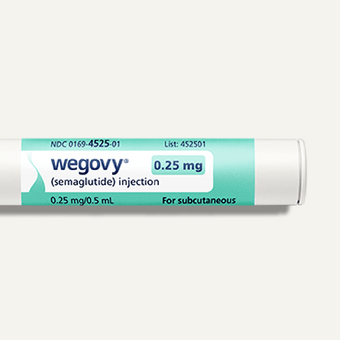
The most effective weight-loss medicines in the news, Mounjaro, Wegovy and Saxenda, are injections, not pills6. They act on appetite hormones, whereas orlistat acts in the gut on fat absorption, so they are not interchangeable 1. There is currently no licensed UK tablet that works like the GLP-1 injections for weight loss.
Semaglutide does exist as a tablet, Rybelsus, but the NHS is clear it is licensed for type 2 diabetes, not weight loss5. So the existence of an oral semaglutide does not mean there is an oral weight-loss version. Seeking a diabetes medicine off-licence for weight loss is not the safe route.
It is also worth being clear about why this matters for safety. The reason there is no over-the-counter pill that works like the injections is that those medicines need clinical assessment, the right dose and monitoring, which is exactly why they are prescription-only 6. A product that offers to skip all of that is not offering a convenient shortcut; it is offering to remove the safeguards.
If the format genuinely matters to you, that is a reasonable thing to discuss with a prescriber, who can weigh up a pill like orlistat against an injection based on your health and what you can access. Our overview of weight-loss treatments sets out the options side by side.
Getting help safely
If you are thinking about a weight-loss pill, the safe path is the same as for any medicine. Prescription orlistat is available on the NHS where you meet the criteria, or privately, and the lower-dose pharmacy versions can be bought after a chat with the pharmacist 1. Either way, use a registered pharmacy, because some websites sell fake products 6.
It also helps to have realistic expectations before you start. The licensed pill, orlistat, produces modest weight loss, with a stopping rule at 12 weeks if you have not lost 5 percent of your body weight 3. That is not a failure of the medicine; it is a sensible way of checking it is worth continuing. A product that cannot point to that kind of honest, checked evidence is asking for more trust than it has earned.
Whatever you take, it works best as part of a plan. NICE frames weight-loss medicines as an adjunct to a reduced-calorie diet, increased activity and clinical support, not as a standalone shortcut 7. A pill can help, but the diet and activity are doing real work alongside it. If a product is sold on the promise that you can skip all of that, the promise is the problem.
Frequently asked questions
Do weight loss pills actually work?
The licensed weight-loss pill orlistat does produce modest weight loss when used with a reduced-calorie diet, with an average difference from placebo of about 3.2 kg at one year 2. It is not dramatic, and there is a stopping rule at 12 weeks if you have not lost 5 percent of your weight 3. Unlicensed slimming supplements are a different matter and their claims are often unsupported 6.Are there weight loss pills like Mounjaro or Wegovy?
Not as licensed UK weight-loss pills. Mounjaro, Wegovy and Saxenda are injections 6. Semaglutide comes as a tablet called Rybelsus, but it is licensed for type 2 diabetes, not weight loss 5. Orlistat is a pill, but it works differently, by blocking fat absorption rather than acting on appetite 1.Are natural or herbal weight loss pills safe?
Natural or herbal does not mean safe or effective. Most are unlicensed supplements, not medicines, and have not been shown to work like a licensed treatment 6. Some can interact with medicines or carry their own risks, and the NHS warns that some websites sell fake weight-loss products 6. A pharmacist can tell you whether something is appropriate for you.Can I get weight loss pills on the NHS?
Prescription orlistat (Xenical) is available on the NHS if you meet the criteria, usually a BMI of 30 or more, or 28 or more with a weight-related condition 3. The lower-dose pharmacy versions, Alli and Orlos, are bought from a pharmacy rather than prescribed 1. A GP or pharmacist can advise whether orlistat is suitable for you.What is the safest weight loss pill?
Safety depends on the person, but the sensible starting point is a licensed medicine supplied through a regulated route, which in the UK mainly means orlistat assessed by a pharmacist or prescriber 1. Unlicensed slimming supplements are not held to the same safety standard, and the NHS warns some online products are fake 6. No pill is completely risk-free, so the safest approach is an honest assessment of whether it suits your health, from a registered pharmacy 1.Your next step
The honest position on weight-loss pills in the UK is that the licensed option is orlistat, its benefit is modest and best alongside diet, and most other pills sold online are unlicensed supplements rather than medicines. The GLP-1 medicines everyone talks about are injections, and the one oral version, Rybelsus, is for diabetes rather than weight loss. Knowing which category a product falls into is the single most useful thing you can do before spending money on it.
If you want to explore a weight-loss pill, speak to your GP or pharmacist about whether orlistat is right for you, or start a consultation with a clinician who can assess your medical history. Be sceptical of any product promising effortless results, treat diet and activity as part of the plan rather than an afterthought, and only ever buy from a registered pharmacy. If a claim sounds too good to be true for a pill, it almost always is.
Disclaimer
This guide is for general information only and does not constitute medical advice, diagnosis or treatment. The information here describes general clinical context based on UK regulatory sources cited above; it is not a recommendation for any specific medicine or treatment, which can only be made by a prescriber following individual assessment.
If you are considering treatment, speak to your GP or pharmacist, or arrange a consultation with a Cloud Pharmacy clinician. Prescription-only medicines are issued only after clinical assessment and where appropriate.
If you experience side effects from any medicine, you can report them through the Yellow Card scheme at yellowcard.mhra.gov.uk.