




This guide sets out who qualifies for Wegovy on the NHS, based on the NICE technology appraisal that governs it, including the BMI and comorbidity criteria, the specialist-service requirement, the two-year limit and the six-month review. It draws on NICE and the NHS. Eligibility rules can change over time, so check the current NICE guidance and your local service for the latest position.
Is Wegovy available on the NHS?
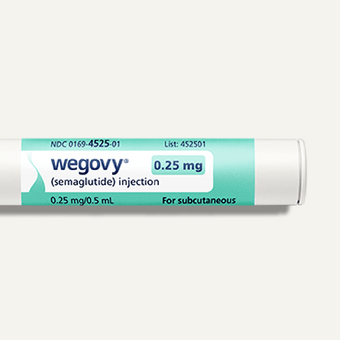
Yes, but within limits. NICE recommends semaglutide (Wegovy) as an option for weight management on the NHS, alongside a reduced-calorie diet and increased physical activity, but only under specific conditions about who can have it and where 1. It is not a treatment your GP can simply hand out on request.
The two defining features of the NHS route are that it is delivered within a specialist weight management service and is used for a maximum of two years1. Everything else sits around those two points 1.
The sections below set out the eligibility criteria, the specialist-service requirement and the review structure, so you can see whether the NHS route is likely to apply to you 1.
The NICE eligibility criteria
Under NICE, Wegovy on the NHS is recommended for adults who have at least one weight-related comorbidity and either a body mass index (BMI) of at least 35.0 kg/m2, or a BMI of 30.0 to 34.9 kg/m2 while also meeting the criteria for referral to specialist overweight and obesity management services 1.
Importantly, lower BMI thresholds (usually reduced by 2.5 kg/m2) apply for people from South Asian, Chinese, other Asian, Middle Eastern, Black African or African-Caribbean family backgrounds, because the health risks of excess weight can occur at a lower BMI 1. So the BMI figures are not one-size-fits-all 1.
A weight-related comorbidity means a health condition linked to weight, such as high blood pressure, type 2 diabetes or obstructive sleep apnoea, which is part of why the criteria target those who stand to benefit most 1. The NHS confirms you are only prescribed it if your BMI meets the eligibility criteria after referral 2.
The lower thresholds for certain ethnic backgrounds are worth understanding rather than treating as a footnote, because they change who qualifies 1. NICE applies them because people from South Asian, Chinese, other Asian, Middle Eastern, Black African or African-Caribbean family backgrounds can carry an equivalent health risk from excess weight at a lower BMI than people from a White family background, so a reduction of around 2.5 kg/m2 in the threshold is used 1. In practice this means someone from one of these backgrounds may meet the NHS criteria at a BMI where someone else would not, which is a deliberate effort to match eligibility to actual risk rather than to a single universal number 1.
The specialist weight management service route
A defining feature is that NHS Wegovy is provided within a specialist weight management service offering multidisciplinary management of overweight and obesity, including but not limited to tiers 3 and 4 1. It is not prescribed as a standalone treatment outside such a service.
The NHS reflects this in practice: if you need support to lose weight, your doctor will refer you to a specialist weight management service, and you are only prescribed semaglutide there if you meet the criteria 2. So the route usually runs through a GP referral into a specialist service rather than a direct prescription 2.
This requirement exists because the evidence and the licence both frame the medicine as an adjunct to diet and activity, with no evidence of benefit as a stand-alone treatment, so the specialist service provides the lifestyle support it is meant to accompany 1.
In practical terms, this is often the part that surprises people most, because it means there can be a referral and a wait rather than an immediate prescription 2. The specialist service is also where the multidisciplinary support, dietary advice, activity guidance and clinical oversight, is delivered, which is integral to how the treatment is meant to work rather than an optional extra 1. Understanding that the medicine and the service go together helps explain why the NHS does not simply prescribe Wegovy on its own, and why the route can feel more involved than getting an ordinary prescription from a GP 12.
Considering treatment for weight management? You can start an assessment with a Cloud Pharmacy clinician, who will review your medical history and confirm whether treatment is appropriate.
The two-year limit and the six-month review
Two time-based rules shape NHS treatment. First, NICE recommends Wegovy for a maximum of two years within the specialist service 1. So NHS treatment is time-limited rather than indefinite.
Second, there is a six-month review: NICE advises considering stopping semaglutide if less than 5 percent of initial weight has been lost after six months of treatment 1. This mirrors the review point built into the medicine's licence 1.
Together these mean NHS Wegovy is a structured, reviewed course of treatment with a defined endpoint, rather than an open-ended prescription 1. That structure is part of how the NHS uses it cost-effectively 1.
The two-year limit in particular is something to plan around if you go through the NHS route, because it shapes how the course is used 1. It means NHS treatment is intended as a defined period of intensive support within the specialist service rather than a permanent prescription, so the diet-and-activity changes built during that time matter for holding the result afterwards 1. The six-month review sits inside that window as an earlier check that the treatment is working well enough to justify continuing, which is the same 5 percent marker used in the medicine's licence 1.
How the NHS route differs from a private prescription
The NHS criteria are stricter than the medicine's broad licence, which covers a BMI of 30 or above, or 27 or above with a weight-related comorbidity 2. So some people who fall within the licence will not meet the narrower NHS eligibility rules, and may consider a private prescription instead 12.
If you do go down the private route, the NHS stresses the importance of buying from a registered pharmacy, because some websites sell fake weight-loss medicines 2. That is a key safety point whenever treatment is obtained privately rather than through the NHS service 2.
Our guide on choosing weight-loss treatment safely covers how to identify a legitimate service if the NHS route is not open to you 2.
It is also worth understanding that the NHS criteria reflect cost-effectiveness and service-capacity decisions as much as clinical suitability, which is why they are narrower than the licence 1. Not meeting the NHS threshold does not necessarily mean the medicine is wrong for you clinically; it means the NHS funds it for a defined group through its specialist services, and a private assessment considers eligibility against the wider licensed criteria 12.
What to do if you think you qualify
If you think you meet the NHS criteria, the route is to speak to your GP about a referral to a specialist weight management service, where eligibility is assessed 2. The service, not a one-off GP appointment, is where NHS Wegovy is prescribed and managed 12.
It helps to know your BMI and any weight-related conditions before that conversation, since those are central to the criteria, remembering the lower thresholds for some ethnic backgrounds 1. Local service availability and waiting times vary, which is worth asking about 1.
Because eligibility rules and service provision can change, it is worth checking the current NICE guidance and your local service for the latest position rather than relying on a fixed snapshot 1. Our guide on how Wegovy works covers the medicine itself in more detail.
Finally, it is worth keeping the NHS and private routes clearly separate in your mind, because the eligibility criteria, the setting and the level of wraparound support differ between them 12. The NHS route offers structured specialist support but to a narrower group and for a defined period, while a private route follows the wider licensed criteria; knowing which you are pursuing helps set realistic expectations about who can access the medicine and how 12.
Frequently asked questions
Who qualifies for Wegovy on the NHS?
NICE recommends it for adults with at least one weight-related comorbidity and either a BMI of at least 35, or a BMI of 30 to 34.9 who also meet the criteria for specialist referral, delivered within a specialist weight management service for up to two years 1. Lower BMI thresholds apply for several ethnic backgrounds 1.Can my GP prescribe Wegovy on the NHS?
Not directly as a standalone prescription. NHS Wegovy is provided within a specialist weight management service, so your GP would refer you there, and you are prescribed it if you meet the criteria 12. It is recommended only alongside the diet and activity support such a service provides 1.How long can you take Wegovy on the NHS?
NICE recommends a maximum of two years within a specialist weight management service 1. There is also a six-month review: NICE advises considering stopping if less than 5 percent of initial weight has been lost after six months 1. So NHS treatment is structured and time-limited rather than indefinite 1.What BMI do you need for Wegovy on the NHS?
Generally a BMI of at least 35 with a weight-related comorbidity, or 30 to 34.9 if you also meet the criteria for specialist referral 1. Lower thresholds (usually reduced by 2.5 kg/m2) apply for South Asian, Chinese, other Asian, Middle Eastern, Black African or African-Caribbean backgrounds 1.Why are the NHS rules stricter than the Wegovy licence?
The licence covers a BMI of 30 or above, or 27 or above with a comorbidity, but the NHS criteria are narrower and reflect cost-effectiveness and specialist-service capacity 12. Some people within the licence will not meet the NHS rules and may consider a private prescription from a registered pharmacy instead 2.What should I do if I think I qualify for NHS Wegovy?
Speak to your GP about a referral to a specialist weight management service, where eligibility is assessed and the medicine is prescribed and managed 12. Know your BMI and any weight-related conditions beforehand, and check the current NICE guidance and local service, since rules and availability can change 1.Your next step
On the NHS, Wegovy is recommended by NICE only within a specialist weight management service and for a maximum of two years. You generally need at least one weight-related comorbidity plus a BMI of at least 35, or a BMI of 30 to 34.9 if you meet the criteria for specialist referral, with lower BMI thresholds for several ethnic backgrounds and a six-month review built in.
If you think you qualify, speak to your GP about a referral to a specialist service, where eligibility is assessed. The NHS criteria are stricter than the medicine's licence, so if the NHS route is not open to you, a private prescription from a registered pharmacy is an alternative. Eligibility rules can change, so check the current NICE guidance and your local service for the latest position rather than relying on a fixed snapshot, since both the criteria and local service availability can shift over time.
Disclaimer
This guide is for general information only and does not constitute medical advice, diagnosis or treatment. The information here describes general clinical context based on UK regulatory sources cited above; it is not a recommendation for any specific medicine or treatment, which can only be made by a prescriber following individual assessment.
If you are considering treatment, speak to your GP or pharmacist, or arrange a consultation with a Cloud Pharmacy clinician. Prescription-only medicines are issued only after clinical assessment and where appropriate.
If you experience side effects from any medicine, you can report them through the Yellow Card scheme at yellowcard.mhra.gov.uk.