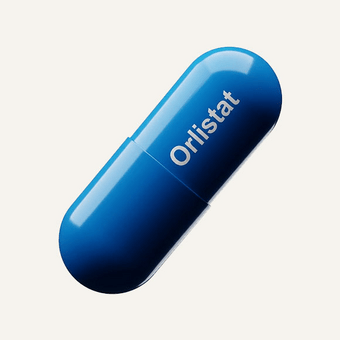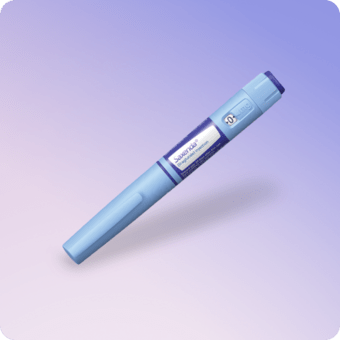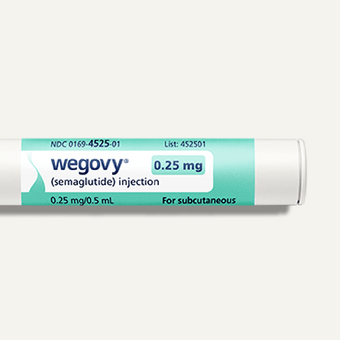






This guide sets out what the SmPC says about Wegovy and breastfeeding, why that position is taken, how it differs from Mounjaro, and what to discuss with your prescriber. It draws on the UK Summary of Product Characteristics and the NHS. It is general information, and any decision about breastfeeding while on weight-loss treatment should be made with your prescriber.
Can you take Wegovy while breastfeeding?
No. The SmPC states that Wegovy should not be used during breast-feeding1. This is a clear instruction rather than a cautious maybe, so the starting position is that the medicine and breastfeeding are not combined 1.
The reason sits in the next section, but the practical message is simple: if you are breastfeeding, Wegovy is not used, and if you are planning to breastfeed, that is part of the conversation about whether and when to take it 13.
Because the position is firm, this is an area where the guidance does not leave much room for interpretation; the decision becomes one of timing and alternatives, discussed with your prescriber 13.
This clarity is actually helpful. With some questions about Wegovy the honest answer is qualified, but here the SmPC reaches a definite conclusion, so you are not left weighing ambiguous advice 1. If you are breastfeeding, the practical planning is simply about sequencing: treatment fits around the breastfeeding period rather than overlapping with it, and your prescriber can help you work out the timing 13.
What the SmPC says
The SmPC's breastfeeding statement is specific: in lactating rats, semaglutide was excreted in milk, and because a risk to a breastfed child cannot be excluded, semaglutide should not be used during breast-feeding1. The conclusion follows directly from the uncertainty about exposure to the infant.
It is worth being precise about what this is based on. The milk data is from animal (rat) studies, and the human picture is not established, which is exactly why the risk cannot be excluded and the cautious instruction is given 1. The position is one of avoiding an unquantified risk rather than a finding of proven harm 1.
So the licence reaches a clear conclusion, not to use it while breastfeeding, from a starting point of incomplete data 1. That is the key fact to carry into any discussion with your prescriber 3.
It is worth understanding why animal milk data leads to a cautious human conclusion. When a medicine is shown to pass into milk in animals and there is little human information, the responsible position is to assume a breastfed infant could be exposed until that is ruled out, which is why the SmPC advises against use rather than waiting for proof of harm 1. This is a common and deliberately careful approach for medicines where the breastfeeding data is limited, and it explains why the wording is a firm instruction rather than a balanced maybe 1.
How this differs from Mounjaro
This is an area where Wegovy and Mounjaro genuinely differ, and it is worth being transparent about it. Mounjaro's SmPC takes a softer line, noting that the amount of tirzepatide in breast milk was undetectable to very low and that, as a peptide, any small amount would be expected to be broken down rather than absorbed, so it could be considered during breastfeeding 2.
Wegovy's SmPC, by contrast, says semaglutide should not be used during breast-feeding, based on the rat milk data and the risk that cannot be excluded 1. So two medicines in the same broad class reach different conclusions on breastfeeding 12.
The practical takeaway is that you cannot assume the advice for one applies to the other 12. If breastfeeding is part of your situation, the specific medicine matters, and this difference is worth raising directly with your prescriber 3.
The difference comes down to the data behind each licence rather than a disagreement about principle 12. For tirzepatide, the SmPC describes the amount in milk as undetectable to very low and reasons that any small amount of a peptide would be broken down rather than absorbed by the infant, which supports the softer 'could be considered' wording 2. For semaglutide, the relevant finding is that it was excreted in the milk of lactating rats and the human risk cannot be excluded, which leads to the firmer 'should not be used' position 1. Same broad class, different evidence, different conclusion 12.
Considering treatment for weight management? You can start an assessment with a Cloud Pharmacy clinician, who will review your medical history and confirm whether treatment is appropriate.
Weighing breastfeeding against treatment
Given the SmPC position, the realistic options if you are breastfeeding are to wait on starting Wegovy or to make an individual decision with your prescriber, rather than to take it while breastfeeding against the licence 13. Weight management is rarely so urgent that it cannot accommodate this 1.
It also helps to remember that the early period after birth is its own situation, and decisions about weight-loss treatment then are best made with a clinician who knows your circumstances rather than from general information 3. The NHS frames semaglutide as prescription-only and supplied after assessment, which is the setting for exactly this kind of individual decision 3.
So the weighing-up is less about overriding the SmPC and more about timing: when, relative to breastfeeding, treatment fits, which is a conversation to have with your prescriber 13.
If losing weight matters to you during this period, it is worth remembering that the diet-and-activity foundation that weight-loss treatment is meant to support can be worked on regardless, and a clinician can advise on a safe overall approach while you are breastfeeding 3. The point is not that nothing can be done, but that Wegovy specifically is not the tool to use during breastfeeding, and a prescriber can help you plan what is appropriate for your circumstances 13.
Timing around breastfeeding
Because Wegovy should not be used during breastfeeding, the timing question is about when treatment can begin relative to stopping breastfeeding, which is an individual decision for your prescriber 13. There is no licence basis for using it while breastfeeding, so the plan works around the breastfeeding period rather than alongside it 1.
If you are also thinking about a future pregnancy, the separate pregnancy rules apply, including stopping at least two months before a planned pregnancy because of the long half-life 1. Our guide on Wegovy and pregnancy covers that side in detail.
The sensible approach is to map out the timing with your prescriber, so that treatment, breastfeeding and any pregnancy plans are sequenced safely rather than overlapping in ways the licence advises against 13.
Thinking of these as a sequence rather than competing choices tends to make the planning clearer 1. Breastfeeding comes first if that is your choice, treatment can follow once breastfeeding has finished, and if a pregnancy is also planned the two-month stopping rule fits in ahead of trying to conceive 1. Laid out that way, the licence positions stop feeling like obstacles and become a straightforward order of events that your prescriber can help you arrange around your own circumstances 13.
What to discuss with your prescriber
If you are breastfeeding or planning to, raise it before starting Wegovy, and ideally at the very first conversation about treatment 1. The key point to cover is that the SmPC says it should not be used during breastfeeding, so the discussion is about timing and, if relevant, alternatives 13.
It is also worth flagging the difference from Mounjaro, so any comparison you have read about is set in the right context for the specific medicine 12. These are exactly the questions a clinical assessment is for, which is one reason Wegovy is prescription-only and supplied after individual assessment 3.
Our guide on how Wegovy works covers the medicine more broadly, and the pregnancy considerations are set out in their own guide given how the two situations differ 1.
The single most useful thing to carry into that conversation is the clarity of the position: the SmPC says Wegovy should not be used during breastfeeding, full stop, so the discussion is not about whether but about when and what else 13. Because the answer is firm, you are spared the difficult job of weighing uncertain advice, and you can focus instead on planning the timing and, if you want to lose weight in the meantime, on the diet-and-activity approach a clinician can safely support while you are breastfeeding 13.
Frequently asked questions
Can I breastfeed while taking Wegovy?
No. The SmPC states that Wegovy should not be used during breast-feeding 1. In lactating rats, semaglutide was excreted in milk, and a risk to a breastfed child cannot be excluded, so the licence advises against it 1. Any decision is one to make individually with your prescriber 3.Why is Wegovy not used while breastfeeding?
Because in lactating rats semaglutide was excreted in milk and a risk to a breastfed child cannot be excluded, the SmPC concludes it should not be used during breast-feeding 1. The human picture is not established, so the position is one of avoiding an unquantified risk rather than a finding of proven harm 1.Is Wegovy different from Mounjaro for breastfeeding?
Yes. Mounjaro's SmPC says tirzepatide could be considered during breastfeeding, as the amount in milk was undetectable to very low and any small amount would be expected to be broken down 2. Wegovy's SmPC says semaglutide should not be used while breastfeeding 1. You cannot assume the advice for one applies to the other 12.Can I start Wegovy after I stop breastfeeding?
Because the SmPC advises against using Wegovy during breastfeeding, the timing of when treatment can begin relative to stopping breastfeeding is an individual decision for your prescriber 13. There is no licence basis for using it while breastfeeding, so the plan works around the breastfeeding period 1.What if I am breastfeeding and want to lose weight?
Wegovy is not used during breastfeeding per the SmPC, so the realistic options are to wait on starting it or to make an individual plan with your prescriber, rather than taking it while breastfeeding 13. The early period after birth is best discussed with a clinician who knows your circumstances 3.Does Wegovy pass into breast milk?
In lactating rats, semaglutide was excreted in milk; the human picture is not established, which is why a risk to a breastfed child cannot be excluded and the SmPC advises it should not be used during breast-feeding 1. This is a decision to make with your prescriber based on your circumstances 3.Your next step
The SmPC says Wegovy should not be used during breastfeeding, because in lactating rats semaglutide was excreted in milk and a risk to a breastfed child cannot be excluded. This is a firmer position than Mounjaro's, whose SmPC says it could be considered during breastfeeding, so the two medicines genuinely differ and you cannot assume the advice for one applies to the other.
If you are breastfeeding or planning to, raise it with your prescriber before starting Wegovy; the discussion is about timing and, if relevant, alternatives rather than using it against the licence. If a future pregnancy is also in your plans, the separate two-month stopping rule applies, and these are exactly the questions a clinical assessment is for. The clarity of the position is a help rather than a hindrance: with a firm answer in hand, you and your prescriber can focus on sequencing breastfeeding, treatment and any pregnancy plans safely.
Disclaimer
This guide is for general information only and does not constitute medical advice, diagnosis or treatment. The information here describes general clinical context based on UK regulatory sources cited above; it is not a recommendation for any specific medicine or treatment, which can only be made by a prescriber following individual assessment.
If you are considering treatment, speak to your GP or pharmacist, or arrange a consultation with a Cloud Pharmacy clinician. Prescription-only medicines are issued only after clinical assessment and where appropriate.
If you experience side effects from any medicine, you can report them through the Yellow Card scheme at yellowcard.mhra.gov.uk.
References
- 4.6 Fertility, pregnancy and lactation (breast-feeding: excreted in rat milk; risk cannot be excluded; should not be used) and 5.2 (long half-life)
- 4.6 (Mounjaro/tirzepatide breast-feeding: undetectable to very low in milk; could be considered)
- Semaglutide (prescription-only assessment; discuss with prescriber)