





This guide explains the Wegovy 2.4 mg dose: what it is, how the 16-week escalation reaches it, what it is licensed for, the side effects, the higher 7.2 mg option, and how NHS access works. It draws on the UK Summary of Product Characteristics, the NHS and NICE.
What the 2.4 mg dose is
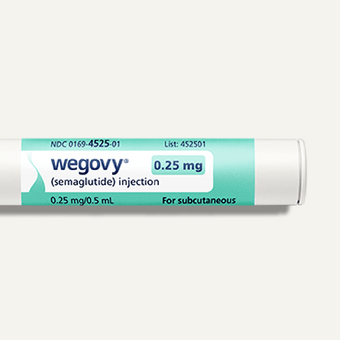
Wegovy is a brand of semaglutide, a GLP-1 receptor agonist, given as a once-weekly injection 3. The 2.4 mg dose is the maintenance dose: the target you build up to and stay on, as distinct from the lower doses used only to get you there 1. Each 2.4 mg dose is delivered in 0.75 ml of solution from a pre-filled pen 1.
This is the key thing to understand about the number. People sometimes worry they are on too high or too low a dose, but 2.4 mg is the standard maintenance dose the SmPC describes for all of Wegovy's indications 1. Reaching it is the normal course of treatment, not something unusual.
Wegovy contains semaglutide, the same active ingredient as Ozempic and Rybelsus, but those are licensed for type 2 diabetes rather than weight management 3. For how Wegovy compares with Mounjaro, see our guide on Mounjaro versus Wegovy.
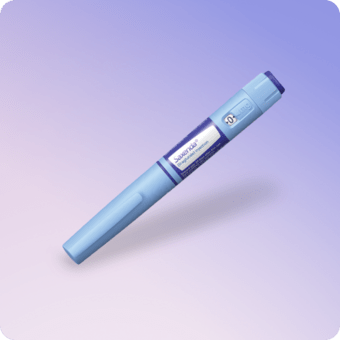
The dose is delivered once a week by a pre-filled pen, and a single pen holds four weekly doses 1. As with Mounjaro, you keep the pen in the fridge until you are ready to use it, inject under the skin and rotate the site, with the device's instructions for use as the definitive guide for your specific pen 3. The mechanics will feel familiar to anyone who has used a weekly GLP-1 injection before.
How you reach 2.4 mg
The 2.4 mg maintenance dose is reached by a 16-week escalation, starting low to reduce the gastrointestinal symptoms that are most likely early on 1. The SmPC schedule is 0.25 mg for weeks 1 to 4, then 0.5 mg, then 1 mg, then 1.7 mg, reaching the 2.4 mg maintenance dose from week 17 1.
So like Mounjaro, Wegovy is started low and built up gradually, though the specific steps and the four-month timeline are its own. The point of the escalation is the same: to let the body adjust and keep treatment tolerable 1. If significant gastrointestinal symptoms occur, the SmPC says to consider delaying the next increase or dropping back to the previous dose until they improve 1.
This is why the lower-strength pens exist: they are the rungs of the escalation, not maintenance doses in their own right 1. The 2.4 mg dose is where the schedule is designed to land.
What 2.4 mg is licensed for
Wegovy 2.4 mg has two licensed uses in the SmPC. The first is weight management in adults with a BMI of 30 or above, or 27 to under 30 with at least one weight-related condition, as an adjunct to a reduced-calorie diet and increased physical activity 2. It is also licensed for adolescents from age 12 in defined circumstances 2.
The second is cardiovascular risk reduction: it is licensed to reduce the risk of major adverse cardiovascular events in adults with established cardiovascular disease and either obesity or overweight 2. That is a distinct indication from weight management, though the dose is the same 2.
In both cases the 2.4 mg maintenance dose is used alongside diet and activity, not instead of them, which is how NICE frames weight-loss medicines generally 26.
It is worth being precise about the brand and ingredient, because this is where confusion creeps in. Wegovy is semaglutide for weight management; the same ingredient is sold as Ozempic and Rybelsus for type 2 diabetes 3. So although you may see the same active ingredient across several products, only Wegovy is the one licensed for weight management, and the 2.4 mg dose is its weight-management maintenance dose 23.
Considering treatment for weight management? You can start an assessment with a Cloud Pharmacy clinician, who will review your medical history and confirm whether treatment is appropriate.
Side effects and the higher 7.2 mg option
Like the other GLP-1 medicines, Wegovy's most common side effects are gastrointestinal, and the NHS lists nausea, vomiting, constipation, diarrhoea, tiredness, injection site reactions and hair loss among them 3. They are most likely during the escalation and tend to settle over time 13. The serious considerations include acute pancreatitis and, for semaglutide, worsening of diabetic retinopathy in some people, which the NHS flags 3.
The SmPC also describes a higher dose of 7.2 mg once weekly, which can be used for weight management in adults with obesity if needed, after a minimum of four weeks on 2.4 mg 1. It is given as three injections of 2.4 mg 1. So 2.4 mg is the standard maintenance dose, with 7.2 mg an option above it in specific circumstances 1.
As with any of these medicines, the right dose is a clinical decision based on response and tolerance, not a target to maximise 1. The NHS advises speaking to a pharmacist or doctor about side effects that bother you or do not go away rather than stopping suddenly 3.
The escalation itself is part of managing side effects. By starting at 0.25 mg and stepping up every four weeks, the schedule gives the body time to adjust at each stage, which is why the gut symptoms are most likely during the build-up and tend to settle once you reach the 2.4 mg maintenance dose 13. If a step is difficult, the SmPC allows delaying the next increase or dropping back temporarily, so the climb can be paced to what you tolerate 1.
NHS access and how long you can stay on it
On the NHS, NICE recommends semaglutide for weight management only within a specialist weight management service and for a maximum of two years, for adults with a BMI of at least 35, or 30 to 34.9 who meet the criteria for referral to such a service, plus a weight-related condition 4. A lower BMI threshold applies for several ethnic groups at equivalent risk 4.
The two-year limit on NHS treatment is a notable difference from how tirzepatide is handled, and it is worth knowing if you are weighing up the options 4. NICE also uses a checkpoint: consider stopping if less than 5 percent of starting weight is lost after six months 4.
Privately, Wegovy is self-funded on prescription from a registered pharmacy, and the NHS advises buying only from a registered pharmacy because some websites sell fake weight-loss medicines 3. Whichever route, it is used alongside diet and activity 2.
NICE's reasoning is worth knowing because it shapes who gets it. The committee found that people lose more weight with semaglutide plus supervised support than with support alone, that more weight is lost with semaglutide than with liraglutide, and that semaglutide may reduce the risk of cardiovascular disease 4. Those findings, weighed against cost, are why NHS access is set at the thresholds above and delivered through specialist services 4.
What to discuss with your prescriber
If you are on or building up to 2.4 mg, useful things to raise are how you are tolerating the escalation, whether you have reached the maintenance dose, and whether the higher 7.2 mg option is relevant for you 1. The NHS notes that semaglutide should not be stopped suddenly and that a barrier or additional contraception may be relevant if there is a chance of pregnancy 3.
Obtain Wegovy only from a registered pharmacy after a clinical assessment 3. If you are choosing between Wegovy and Mounjaro, that is a clinical decision rather than a ranking, and our guide on Mounjaro versus Wegovy sets out the differences. The headline to hold onto is that 2.4 mg is the maintenance dose you build up to over 16 weeks, not where you start, and the lower strengths are simply the steps along the way 1.
Frequently asked questions
Is 2.4 mg the maintenance dose of Wegovy?
Yes. The SmPC describes 2.4 mg once weekly as the maintenance dose, reached by escalating over 16 weeks from a 0.25 mg start 1. The lower-strength doses are the rungs of that escalation, not maintenance doses in their own right 1. A higher 7.2 mg dose can be used in specific circumstances after at least four weeks on 2.4 mg 1.How long does it take to reach 2.4 mg of Wegovy?
About 16 weeks. The SmPC schedule is 0.25 mg for weeks 1 to 4, then 0.5 mg, 1 mg and 1.7 mg, reaching the 2.4 mg maintenance dose from week 17 1. If significant gut symptoms occur, a prescriber may delay the next increase or drop back to the previous dose until they improve 1.What is the difference between 2.4 mg and 7.2 mg Wegovy?
2.4 mg is the standard maintenance dose for all of Wegovy's indications 1. The SmPC describes a higher 7.2 mg once-weekly dose (given as three 2.4 mg injections) that can be used for weight management in adults with obesity if needed, after at least four weeks on 2.4 mg 1. The right dose is a clinical decision based on response and tolerance 1.How long can you stay on Wegovy on the NHS?
NICE recommends semaglutide for weight management only within a specialist service and for a maximum of two years on the NHS 4. There is also a checkpoint to consider stopping if less than 5 percent of starting weight is lost after six months 4. This two-year limit is a notable difference from how tirzepatide is handled 4.Is Wegovy the same as Ozempic?
Both contain semaglutide, but Wegovy is the brand licensed for weight management, while Ozempic and Rybelsus are semaglutide brands licensed for type 2 diabetes 3. So they are the same active ingredient used for different licensed purposes, and Ozempic should not be sought for weight loss 3.Is Wegovy 2.4 mg or Mounjaro better?
Neither is automatically better; they are different medicines and the choice is clinical, not a ranking 3. Wegovy is semaglutide acting on the GLP-1 receptor, while Mounjaro is tirzepatide acting on two receptors 3. On the NHS, semaglutide is limited to a specialist service for up to two years, which differs from tirzepatide 4. Our guide on Mounjaro versus Wegovy sets out the differences.Your next step
Wegovy 2.4 mg is the maintenance dose of semaglutide for weight management, reached by a 16-week escalation rather than started at, licensed for weight management and cardiovascular risk reduction, with a higher 7.2 mg option in specific cases. On the NHS it is used within a specialist service for up to two years.
If you are considering or taking Wegovy, talk to your prescriber about the escalation, the maintenance dose and NHS eligibility, or compare it with Mounjaro if you are weighing the options. Do not stop suddenly, and obtain it only from a registered pharmacy. Knowing that 2.4 mg is a destination reached gradually, rather than a starting point, is the single most useful thing to take from this guide.
Disclaimer
This guide is for general information only and does not constitute medical advice, diagnosis or treatment. The information here describes general clinical context based on UK regulatory sources cited above; it is not a recommendation for any specific medicine or treatment, which can only be made by a prescriber following individual assessment.
If you are considering treatment, speak to your GP or pharmacist, or arrange a consultation with a Cloud Pharmacy clinician. Prescription-only medicines are issued only after clinical assessment and where appropriate.
If you experience side effects from any medicine, you can report them through the Yellow Card scheme at yellowcard.mhra.gov.uk.