





This guide sets out what the SmPC and NHS each say about Mounjaro and breastfeeding, why they differ, how to weigh it, and what to discuss. It draws on the UK Summary of Product Characteristics and the NHS. It is general information, and any decision about breastfeeding while on weight-loss treatment should be made with your prescriber.
Can you breastfeed while taking Mounjaro?
The honest answer is that it depends which source you read, which is why this guide presents both and recommends an individual decision with your prescriber 12. The SmPC leaves the door open, saying tirzepatide could be considered during breast-feeding, while the NHS says it is not used while breastfeeding12.
So this is not a case where there is a single, simple yes or no in the way there is for pregnancy (where both agree it must not be used) 12. Instead, breastfeeding sits in an area of genuine difference between the licence and the NHS patient guidance 12.
Because of that, the right approach is to understand both positions, covered next, and to make the decision with your prescriber based on your circumstances rather than from a single source 2. The sections below set out each position and why they differ, and what to weigh in the conversation, so you can approach it with both views in hand 12.
It helps to know from the outset that this difference does not reflect new or conflicting evidence so much as a different reading of the same limited information 12. The studies in breastfeeding women are small, and there is more we do not know than we do, so one source can reasonably emphasise the reassuring measured levels while another emphasises the gaps 12. Neither is being careless; they are simply weighing caution differently, and that is exactly why a personal recommendation from your prescriber is more useful than trying to pick a winner between the two yourself 2.
What the SmPC says
The SmPC's breastfeeding statement is relatively reassuring. It reports that in a study of 11 women, the concentration of tirzepatide in breast milk was undetectable to very low (less than 10 ng/ml) compared with plasma levels after a single 5 mg dose 1. So the measured amount in milk was small 1.
It adds that, because tirzepatide is an amino acid sequence (a peptide), any low amount present in breast milk would be expected to be broken down and not absorbed intact by the breastfed infant 1. On that basis, the SmPC concludes that tirzepatide could be considered for use during breast-feeding1.
The SmPC does add a caveat that it is not known whether the reduced food intake the medicine causes affects the composition or nutrient content of breast milk 1. So even the more permissive source carries a note of caution 1.
What the NHS says
The NHS takes a more cautious line. Its patient guidance states that tirzepatide is not used while breastfeeding as it is not known if the medicine passes into breast milk2. It advises telling your doctor if you are breastfeeding 2.
So the NHS frames the position as one of avoiding use during breastfeeding because of uncertainty, rather than weighing the low measured levels the SmPC describes 2. This is a more conservative stance than the licence 12.
Neither source is wrong; they are reflecting the same limited evidence with a different emphasis, the SmPC leaning on the low measured amounts and peptide breakdown, the NHS leaning on the residual uncertainty 12. That difference is the heart of this topic 12.
It is worth noting that the NHS patient information is written to be cautious and broadly applicable, which is appropriate for general public guidance, while the SmPC is the detailed clinical document that includes the specific study findings 12. Seeing it that way can help make sense of why the two read differently without either being unreliable 12. For an individual decision, a clinician can draw on both, which is more than a patient is expected to do alone 2.
Considering treatment for weight management? You can start an assessment with a Cloud Pharmacy clinician, who will review your medical history and confirm whether treatment is appropriate.
Why the two differ and how to weigh it
The difference comes down to emphasis on the same limited data, not a contradiction of fact 12. The SmPC highlights that measured milk levels were undetectable to very low and that a peptide would be broken down in the infant's gut, supporting 'could be considered' 1. The NHS highlights that the human picture is not fully established, supporting 'not used' 2.
For you, this means breastfeeding while on Mounjaro is genuinely a judgement call rather than a settled rule, and one best made with a clinician who can weigh your circumstances, the benefits of breastfeeding, and the reasons for treatment 12. It is not a decision to make from a single web page, including this one 2.
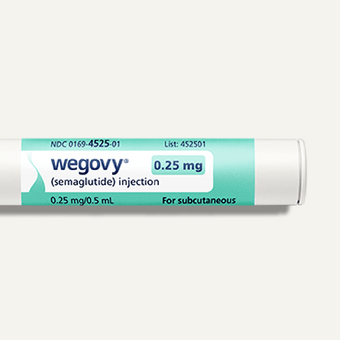
It also differs from the related medicine semaglutide (Wegovy), whose SmPC takes a firmer 'should not be used' line on breastfeeding, so you cannot assume advice for one GLP-1 medicine applies to another 1. The specific medicine matters 1.
When weighing it up with your prescriber, the things that tend to matter are the value of breastfeeding to you and your baby, how important starting treatment is right now versus waiting, and your wider health picture 12. There is rarely an urgent reason that weight-management treatment cannot wait if you and your clinician lean towards caution, which means timing is often the practical lever rather than having to take the medicine while breastfeeding against your comfort level 12. The point is that it is a considered, individual choice, not a default 2.
Timing and the pregnancy link
Breastfeeding is distinct from pregnancy, where the position is unambiguous: Mounjaro must not be used in pregnancy, and the SmPC advises stopping it at least a month before a planned pregnancy because of its long half-life of around five days 1. So if a future pregnancy is also in your thinking, that separate, firmer rule applies 1.
For breastfeeding itself, the practical options, if you and your prescriber lean towards caution, are to time treatment around the breastfeeding period or to make an individual decision to use it while breastfeeding in line with the SmPC's 'could be considered' position 12. Either way it is a planned, individual choice 2.
Our guide on Mounjaro and women's fertility covers the pregnancy and contraception side, which is the clearer-cut part of this picture 1.
What to discuss with your prescriber
If you are breastfeeding or planning to, raise it with your prescriber before starting Mounjaro, and bring both positions into the conversation: the SmPC's 'could be considered' and the NHS's 'not used' 12. This lets them make a recommendation for your situation rather than you having to reconcile the two alone 2.
Key things to cover are the benefits of breastfeeding for you and your baby, your reasons for wanting treatment, the timing, and any future pregnancy plans given the separate stopping rule 12. The NHS advises telling your doctor if you are breastfeeding, which is the right starting point 2. Going in with both positions in mind, the SmPC's 'could be considered' and the NHS's 'not used', means you can have a properly informed conversation rather than feeling you have to have already chosen a side before you start 12.
These are exactly the questions a clinical assessment is for, which is one reason Mounjaro is prescription-only and supplied after individual assessment 2. Our guide on how Mounjaro works covers the medicine more broadly 1.
If you have already started Mounjaro and then find you are breastfeeding, or are thinking about it, the same advice applies: do not make a snap decision alone, but raise it promptly with your prescriber so the two of you can decide on the best course given both positions 2. Bringing the question to a clinician, rather than stopping or continuing on a guess, is the safe response whichever way the conversation goes 12.
Frequently asked questions
Can I breastfeed while taking Mounjaro?
The sources differ. The SmPC says it could be considered during breast-feeding, because the amount in breast milk was undetectable to very low and a peptide would be broken down in the infant 1. The NHS is more cautious, saying it is not used while breastfeeding as it is not known if it passes into milk 2. Decide individually with your prescriber 2.What does the SmPC say about Mounjaro and breastfeeding?
In a study of 11 women, the amount of tirzepatide in breast milk was undetectable to very low, and as a peptide any small amount would be expected to be broken down and not absorbed by the infant, so the SmPC says it could be considered during breast-feeding 1. It notes it is not known whether reduced food intake affects milk composition 1.What does the NHS say about Mounjaro and breastfeeding?
The NHS is more cautious, stating tirzepatide is not used while breastfeeding as it is not known if the medicine passes into breast milk, and advising you tell your doctor if you are breastfeeding 2. This is a more conservative position than the SmPC's 'could be considered' 12.Why do the SmPC and NHS differ on Mounjaro and breastfeeding?
They emphasise the same limited evidence differently: the SmPC leans on the low measured milk levels and peptide breakdown, the NHS on the residual uncertainty about the human picture 12. Neither is wrong, which is exactly why breastfeeding on Mounjaro is a judgement call to make with your prescriber 2.Is Mounjaro different from Wegovy for breastfeeding?
Yes. Mounjaro's SmPC says tirzepatide could be considered during breastfeeding, while Wegovy's SmPC takes a firmer 'should not be used' line for semaglutide 1. So you cannot assume advice for one GLP-1 medicine applies to another; the specific medicine matters 1.What should I discuss with my prescriber about breastfeeding on Mounjaro?
Bring both positions (the SmPC's 'could be considered' and the NHS's 'not used') and cover the benefits of breastfeeding, your reasons for treatment, timing, and any future pregnancy plans given the separate stopping rule 12. The NHS advises telling your doctor if you are breastfeeding 2.Your next step
On breastfeeding, the SmPC and NHS differ: the SmPC says tirzepatide could be considered during breast-feeding, because the amount in breast milk was undetectable to very low and a peptide would be broken down in the infant, while the NHS more cautiously says it is not used while breastfeeding as it is not known if it passes into milk. This is a genuine judgement call, not a settled rule.
Raise breastfeeding with your prescriber before starting, bring both positions into the conversation, and make the decision individually based on the benefits of breastfeeding, your reasons for treatment and any future pregnancy plans. Pregnancy itself is unambiguous: Mounjaro must not be used, and is stopped at least a month before trying to conceive. There is rarely an urgent reason weight-management treatment cannot wait if you and your clinician lean towards caution, so timing is often the practical lever rather than a difficult either-or between breastfeeding and treatment that you have to resolve all at once on your own.
Disclaimer
This guide is for general information only and does not constitute medical advice, diagnosis or treatment. The information here describes general clinical context based on UK regulatory sources cited above; it is not a recommendation for any specific medicine or treatment, which can only be made by a prescriber following individual assessment.
If you are considering treatment, speak to your GP or pharmacist, or arrange a consultation with a Cloud Pharmacy clinician. Prescription-only medicines are issued only after clinical assessment and where appropriate.
If you experience side effects from any medicine, you can report them through the Yellow Card scheme at yellowcard.mhra.gov.uk.
References
- 4.6 Fertility, pregnancy and lactation (breast-feeding: 11-women study, undetectable to very low in milk; peptide broken down; could be considered; must not be used in pregnancy; long half-life)
- Tirzepatide (breastfeeding: not used while breastfeeding as it is not known if it passes into milk; tell your doctor)