





This guide compares liraglutide (the active ingredient in Saxenda) and semaglutide (in Wegovy): how they work, how they are taken, what their trials showed, and how they are licensed. It draws on the UK Summaries of Product Characteristics and the NHS. The trial figures are averages, not promises, and the right choice for you is an individual clinical decision.
Two related GLP-1 molecules
Both liraglutide and semaglutide are GLP-1 receptor agonists, meaning they mimic the gut hormone GLP-1 to reduce appetite, increase fullness and lower food intake 12. So they belong to the same family and work in broadly the same way 12. Both lower body weight mainly by reducing appetite and food intake rather than by increasing how many calories you burn, and both are given as an injection under the skin 12.
They are both human GLP-1 analogues with very high similarity to the natural hormone, liraglutide with about 97 percent homology and semaglutide with about 94 percent 12. The differences in their structure translate into how long they last in the body, which drives the daily-versus-weekly difference below 12.
So at the level of mechanism they are close cousins: both injectable appetite-reducing GLP-1 medicines used as an adjunct to diet and activity 12. The practical differences are what matter for choosing between them 12.
It is worth clearing up the naming, because it confuses people 12. 'Liraglutide' and 'semaglutide' are the generic names of the active ingredients, while Saxenda and Wegovy are the brand names of the weight-management products that contain them 12. The same generic ingredients also appear in diabetes products under other brand names, which is why the generic-name comparison is useful: it focuses on the molecule rather than the brand 12. So comparing 'liraglutide and semaglutide' is comparing the active ingredients behind the brands, which is the clearest way to see how they differ 12.
Daily versus weekly
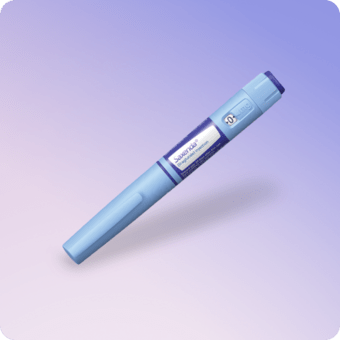
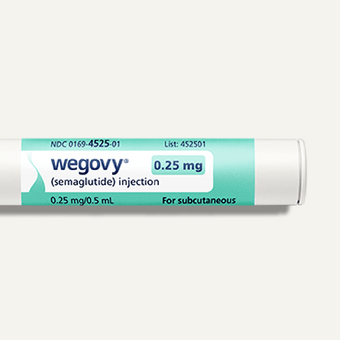
The most obvious practical difference is dosing frequency. Liraglutide (Saxenda) is a once-daily injection, escalated from 0.6 mg to a 3.0 mg maintenance dose 1. Semaglutide (Wegovy) is a once-weekly injection, escalated over 16 weeks to a 2.4 mg maintenance dose 2.
This reflects their different half-lives: liraglutide is cleared more quickly, so it is given daily, while semaglutide stays in the body longer, allowing weekly dosing 12. For many people the daily-versus-weekly routine is a meaningful practical difference in itself 12.
So if injection frequency matters to you, that is a legitimate factor: a weekly injection suits some people, while others do not mind a daily one 12. Our guides on Saxenda and Wegovy cover each in detail 12.
The frequency also has knock-on effects worth bearing in mind 1. A daily injection means remembering a dose every day and using more medicine over time, while a weekly one is a single regular event and tends to use less 12. Neither is inherently better, but for some people the simplicity of weekly dosing is a real advantage, while others prefer the shorter-acting daily option, and that practical preference is a reasonable thing to weigh 12.
What the trials showed
On weight loss, the two have different trial figures, though both are averages from studies using the medicine alongside diet and activity, not guarantees 12. In liraglutide's main weight-management trial, average weight loss was around 8 percent of body weight at 56 weeks, with about 63 percent of people losing at least 5 percent 1.
In semaglutide's main weight-management trial, average weight loss was around 15 percent at 68 weeks, with about 83 percent losing at least 5 percent 2. So, on these trial averages, semaglutide produced greater average weight loss than liraglutide 12.
It is important to read these as trial averages with diet and activity support, and individual results vary considerably 12. They are a guide to what each medicine can do, not a promise for any one person, and effectiveness is only one factor in the choice 12.
The figures also come from different trials, so they are not a head-to-head comparison in the same study 12. The studies enrolled different people and ran for different lengths (around 56 weeks for liraglutide and 68 weeks for semaglutide), so the higher average for semaglutide should be read as a broad indication rather than a precise head-to-head margin 12. The honest summary is that semaglutide tended to produce more weight loss in its trials, while remembering both are averages and individual results differ 12. The figures are a guide to the medicines, not a prediction of your own result 12.
Considering treatment for weight management? You can start an assessment with a Cloud Pharmacy clinician, who will review your medical history and confirm whether treatment is appropriate.
Side effects and how they compare
Their side-effect profiles are broadly similar, as you would expect for two GLP-1 medicines 12. Both very commonly cause gastrointestinal effects, nausea, vomiting, diarrhoea and constipation, most prominent during dose escalation and then settling, along with headache 12.
Both also carry cautions around pancreatitis, gallstones, dehydration and, in diabetes taken with certain medicines, low blood sugar, and both note the aspiration consideration around general anaesthesia 12. So the kinds of side effects and cautions are comparable 12.
The daily liraglutide can mean side effects are encountered daily rather than around a weekly dose, which is another facet of the daily-versus-weekly difference 1. Overall, though, neither has a markedly different safety profile from the other within the class 12.
Both also share the same broad approach to managing side effects, which is reassuring if you have read about one and are considering the other 12. The gradual dose escalation in each is designed to keep the gut effects milder, and the usual measures, smaller meals, staying hydrated and giving the body time to adjust, apply to both 12. So the practical experience of starting either is broadly similar, even though one is daily and the other weekly 12.
How they are licensed
Both are licensed for weight management in adults with a BMI of 30+, or 27+ with a weight-related comorbidity, alongside diet and activity, and both build in a review if less than 5 percent of weight is lost (liraglutide at 12 weeks on the 3.0 mg dose, semaglutide at six months) 12. So their core weight-management licensing is similar 12.
A notable difference is that semaglutide (Wegovy) also has a cardiovascular indication, to reduce the risk of major cardiovascular events in adults with established cardiovascular disease and obesity or overweight, which liraglutide for weight management does not carry 2. So semaglutide's licence is broader in that respect 2.
On the NHS, access to each depends on the relevant NICE guidance and services, which differ, so what you can actually get may depend on more than the molecule itself 23. Our guides on NHS eligibility cover this 2.
How the choice is made
Because they are related but not identical, the choice between liraglutide and semaglutide is an individual clinical decision, not a simple ranking 12. A prescriber weighs your eligibility, the daily-versus-weekly routine, the trial effectiveness, your tolerance, any cardiovascular considerations, and access 12.
Greater average weight loss in trials is one factor, but it does not help someone who cannot tolerate a medicine, does not meet its criteria, or for whom the access route is not available, so it is weighed alongside everything else 12. This guide presents the figures as information, not a recommendation of one over the other 12.
Our guide on how to choose a weight-loss treatment covers the wider picture. The headline is that liraglutide and semaglutide are closely related GLP-1 medicines that differ mainly in dosing frequency, trial weight-loss figures and semaglutide's extra cardiovascular indication, and the right one for you is decided with a prescriber 12.
Practical preferences are a legitimate part of the decision too 12. Some people much prefer a weekly injection to a daily one, or do not mind injecting daily; some weigh the trial effectiveness heavily, others weigh tolerability, eligibility or the cardiovascular angle 12. A good consultation makes room for those preferences alongside the clinical factors, because the molecule that suits your life and that you can stick with is part of what makes treatment work for you 12. The molecule that fits your life is part of the answer, not just the one with the higher trial number, which is why an individual assessment beats a headline comparison 12.
Frequently asked questions
What is the difference between liraglutide and semaglutide?
Both are GLP-1 medicines for weight management used alongside diet and activity, but liraglutide (Saxenda) is a once-daily injection and semaglutide (Wegovy) is once-weekly 12. In their trials, average weight loss was around 8 percent with liraglutide and around 15 percent with semaglutide, and semaglutide also has a cardiovascular indication 12.Is semaglutide more effective than liraglutide?
On trial averages, semaglutide produced greater average weight loss (around 15 percent at 68 weeks) than liraglutide (around 8 percent at 56 weeks) 12. But these are trial averages with diet and activity, individual results vary, and effectiveness is only one factor in the choice, which is individual 12.Is liraglutide daily and semaglutide weekly?
Yes. Liraglutide (Saxenda) is a once-daily injection escalated to a 3.0 mg maintenance dose, while semaglutide (Wegovy) is once-weekly, escalated over 16 weeks to 2.4 mg 12. This reflects their different half-lives, and the daily-versus-weekly routine is a real practical difference 12.Do liraglutide and semaglutide have different side effects?
Their profiles are broadly similar, as both are GLP-1 medicines: very common gut effects like nausea, plus cautions around pancreatitis, gallstones, dehydration and, in diabetes, low blood sugar 12. The daily liraglutide can mean side effects are encountered daily rather than around a weekly dose 1.Are liraglutide and semaglutide licensed for the same thing?
Both are licensed for weight management in adults with a BMI of 30+, or 27+ with a comorbidity, with a review if under 5 percent is lost 12. A difference is that semaglutide (Wegovy) also has a cardiovascular indication that liraglutide for weight management does not 2.How do I choose between liraglutide and semaglutide?
With a prescriber, who weighs your eligibility, the daily-versus-weekly routine, the trial effectiveness, your tolerance, any cardiovascular considerations and access 12. The trial figures are information rather than a recommendation of one over the other; the right choice is individual 12.Your next step
Liraglutide (Saxenda) and semaglutide (Wegovy) are closely related GLP-1 medicines for weight management used alongside diet and activity, but they differ: liraglutide is a once-daily injection and semaglutide is once-weekly, their trial weight-loss averages were around 8 and 15 percent respectively, and semaglutide also carries a cardiovascular indication.
These trial figures are averages, not promises, and the right choice for you is an individual clinical decision weighing eligibility, the daily-versus-weekly routine, effectiveness, tolerance, any cardiovascular factors and access. Discuss it with a prescriber rather than choosing on the headline weight-loss number alone, since a higher trial average does not help someone who cannot tolerate that medicine or does not meet its criteria, and the figures come from separate trials rather than a head-to-head comparison in the same study of the same people, so they are a broad indication of difference rather than a precise like-for-like margin, and the molecule that fits your life matters as much as the headline figure.
Disclaimer
This guide is for general information only and does not constitute medical advice, diagnosis or treatment. The information here describes general clinical context based on UK regulatory sources cited above; it is not a recommendation for any specific medicine or treatment, which can only be made by a prescriber following individual assessment.
If you are considering treatment, speak to your GP or pharmacist, or arrange a consultation with a Cloud Pharmacy clinician. Prescription-only medicines are issued only after clinical assessment and where appropriate.
If you experience side effects from any medicine, you can report them through the Yellow Card scheme at yellowcard.mhra.gov.uk.
References
- Saxenda SmPC 4.1/4.2/4.8/5.1 (liraglutide; ~97% GLP-1 homology; once-daily; 3.0 mg maintenance; BMI indication; 12-week 5% review; GI side effects; SCALE ~8% at 56 weeks, ~63% lost >=5%)
- Wegovy SmPC 4.1/4.2/4.8/5.1 (semaglutide; ~94% GLP-1 homology; once-weekly; 2.4 mg maintenance; BMI indication + cardiovascular indication; 6-month 5% review; STEP ~15% at 68 weeks, ~83% lost >=5%)
- NICE (NHS access to semaglutide via specialist service; access differs between medicines)