





This guide explains what alli is, how it differs from prescription orlistat, who can use it, how it is taken, its side effects, and when you should consult a doctor or pharmacist first. It draws on the UK Summary of Product Characteristics. It is general information; a pharmacist can advise whether alli is suitable for you.
What is alli?
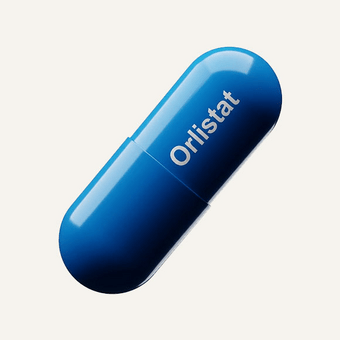
alli is a hard capsule containing 60 mg of orlistat, the over-the-counter version of the same active ingredient found in prescription Xenical (which is 120 mg) 1. So alli is a lower-dose, pharmacy-available form of orlistat 1.
It is licensed for weight loss in adults who are overweight (BMI of 28 or above), taken alongside a mildly reduced-calorie, lower-fat diet1. Like the prescription version, it is meant to support dietary change rather than replace it 1.
Because it is available without a prescription, alli comes with clear rules about who can use it, for how long, and when to seek advice first, which this guide sets out 1.
The over-the-counter status is the key thing to understand about alli 1. Being able to buy it from a pharmacy without a prescription does not make it free of considerations; it shifts the responsibility for the safety checks onto you and the pharmacist who sells it 1. That is why this guide spends time on who can use it, the duration limit and the situations where you should speak to a doctor or pharmacist first, since those are exactly the checks a prescriber would otherwise make for you 1.
How alli works and how it differs from Xenical
Like all orlistat, alli is a lipase inhibitor: it blocks the gut enzymes that digest dietary fat, so some fat passes through undigested instead of being absorbed 1. At the 60 mg dose, it is estimated to block the absorption of about 25 percent of the fat you eat 1.
The main differences from Xenical are the dose and how you get it: alli is 60 mg and available over the counter, while Xenical is 120 mg and prescription-only1. The active ingredient and mechanism are the same; the strength and supply route differ 1.
Because the dose is lower and the setting is self-care, alli has a defined maximum treatment duration and clear advice on when to involve a doctor, covered below 1.
The lower dose also means a smaller effect: at 60 mg, orlistat blocks about a quarter of dietary fat, compared with the higher 120 mg prescription strength 1. So alli is best thought of as a more modest, self-care aid to weight loss alongside diet and exercise, rather than a substitute for the prescription version or for the appetite-reducing injections, which work in a different way altogether 1. Having realistic expectations of what a lower-dose, fat-blocking aid can do helps you judge whether it suits your goals 1.
Who can use alli
alli is for adults aged 18 and over with a BMI of 28 or above1. It is not established as safe or effective in under-18s, and there are no data for that group, so it should not be used by children or teenagers 1.
It is recommended that a diet and exercise programme is started before beginning alli, and continued when treatment stops, since the medicine supports rather than replaces lifestyle change 1. The diet should be nutritionally balanced, mildly reduced-calorie, and contain about 30 percent of calories from fat 1. Starting the lifestyle changes first also means alli is added to an effort already under way, rather than being relied on to do the work on its own, which fits how it is intended to be used 1.
Some people should consult a doctor or pharmacist before starting, including those taking medicines for diabetes, blood pressure or cholesterol, levothyroxine, antiepileptics, amiodarone or HIV medicines, and those with kidney disease, because of interactions and cautions covered below 1.
Considering treatment for weight management? You can start an assessment with a Cloud Pharmacy clinician, who will review your medical history and confirm whether treatment is appropriate.
How alli is taken
The dose is one 60 mg capsule three times daily, with no more than three capsules in 24 hours, taken with water immediately before, during or up to one hour after each main meal 1. If a meal is missed or contains no fat, the dose is omitted1.
Importantly, treatment should not exceed six months1. And if you have not lost weight after 12 weeks, you should consult a doctor or pharmacist, as it may be necessary to stop 1. So there is both a duration limit and an early checkpoint 1.
A multivitamin supplement should be taken at bedtime, because orlistat can reduce absorption of the fat-soluble vitamins A, D, E and K 1. Our guide on Xenical covers the prescription 120 mg version 1.
The six-month limit and the 12-week checkpoint together give alli a sensible self-care shape 1. The 12-week point is where you assess whether it is actually helping, and the six-month cap means it is intended as a time-limited aid to kick-start weight loss alongside diet and exercise, not an indefinite treatment to take without review 1. If you find you want to continue beyond that, or it is not working, that is the moment to seek professional advice rather than simply carrying on 1.
Many people also find the fat-related side effects themselves act as a natural limit on how the medicine is used 1. Because the effects are worse with high-fat meals and milder on a lower-fat diet, alli effectively rewards sticking to the recommended eating pattern and discourages high-fat meals, which is part of how it is intended to work alongside diet 1. Understanding that in advance helps you anticipate the effects and keep them manageable rather than being caught out by them, and to use the medicine the way it is designed to be used 1.
Side effects
alli's side effects are the same fat-related gastrointestinal effects as prescription orlistat, and they arise directly from the unabsorbed fat 1. Very common effects include oily spotting, flatus with discharge, faecal urgency, fatty or oily stools, oily evacuation, flatulence and soft stools1.
These are generally mild and transient, tend to occur early in treatment (within the first three months), and are less likely on a lower-fat diet, which is one of the main reasons the reduced-fat diet is advised 1. Eating high-fat meals makes them worse 1.
Less common but important issues include mild rectal bleeding (consult a doctor if it occurs) and, rarely, more serious problems such as pancreatitis, gallstones, serious liver problems and oxalate kidney problems, so persistent or severe symptoms should be checked 1.
When to consult a doctor and contraindications
alli is contraindicated in pregnancy and breastfeeding, in people taking ciclosporin or warfarin or other oral anticoagulants, in chronic malabsorption syndrome or cholestasis, and in anyone hypersensitive to it 1. So it is not suitable for everyone 1.
Beyond those, several situations mean you should consult a doctor or pharmacist first: taking medicines for diabetes (the dose may need adjusting as you lose weight), blood pressure or cholesterol, levothyroxine (which may need separating in time or adjusting), antiepileptics, amiodarone, or HIV medicines, and having kidney disease1.
An additional contraceptive method is advised if severe diarrhoea occurs, since that could reduce the pill's effectiveness 1. Because alli is bought without a prescription, these checks are your responsibility, and a pharmacist can help you work through them 1.
It is worth treating the pharmacy conversation as a genuine part of using alli safely rather than a formality 1. Pharmacists are well placed to check whether alli is suitable for you, flag any of the medicines or conditions above, and advise on the diet and multivitamin, and they would much rather have that conversation before you start than after a problem 1. Buying it off the shelf does not mean those checks do not apply; it means a pharmacist is the person to do them with 1.
Frequently asked questions
What is alli?
alli is the over-the-counter 60 mg version of orlistat, a capsule taken with meals for weight loss in adults with a BMI of 28 or above, alongside a lower-fat, reduced-calorie diet 1. It contains the same active ingredient as prescription Xenical (120 mg) but at a lower dose and is available without a prescription 1.How is alli different from Xenical?
The active ingredient (orlistat) and mechanism are the same, but alli is 60 mg and available over the counter, while Xenical is 120 mg and prescription-only 1. alli also has a defined maximum treatment duration of six months 1.How does alli work?
alli is a lipase inhibitor: it blocks the gut enzymes that digest dietary fat, so some fat passes through undigested rather than being absorbed 1. At the 60 mg dose it is estimated to block the absorption of about 25 percent of the fat you eat 1.How do you take alli?
One 60 mg capsule three times daily (no more than three in 24 hours), with each main meal, omitting the dose if a meal is missed or fatless 1. Treatment should not exceed six months, and you should consult a doctor or pharmacist if you have not lost weight after 12 weeks 1. Take a multivitamin at bedtime 1.What are the side effects of alli?
The same fat-related gut effects as prescription orlistat: oily spotting, flatus with discharge, faecal urgency, fatty or oily stools, flatulence and soft stools 1. They are usually mild, occur early, and are less likely on a lower-fat diet. A multivitamin is advised as orlistat can reduce absorption of vitamins A, D, E and K 1.Who should not take alli, or check with a doctor first?
alli is contraindicated in pregnancy, breastfeeding, with ciclosporin or anticoagulants, and in malabsorption or cholestasis 1. Consult a doctor or pharmacist first if you take medicines for diabetes, blood pressure, cholesterol, levothyroxine, antiepileptics, amiodarone or HIV, or have kidney disease 1.Your next step
alli is the over-the-counter 60 mg version of orlistat, working the same way as prescription Xenical by blocking the absorption of about a quarter of the fat you eat. It is for adults with a BMI of 28 or above, taken three times daily with a lower-fat, reduced-calorie diet, for no more than six months, with a multivitamin at bedtime. Its side effects are the familiar fat-related gut effects.
Because alli is bought without a prescription, the checks are your responsibility: it is not suitable in pregnancy, breastfeeding or with anticoagulants, and you should consult a doctor or pharmacist first if you take certain medicines or have kidney disease. Consult them too if you have not lost weight after 12 weeks, and a pharmacist can help you decide if alli is right for you. Buying it off the shelf does not mean the safety checks do not apply; it means a pharmacist is the person to do them with, and the lower-fat diet keeps the gut effects manageable while the six-month limit keeps it a time-limited aid rather than an open-ended treatment to take without review, with the 12-week check confirming it is actually helping.
Disclaimer
This guide is for general information only and does not constitute medical advice, diagnosis or treatment. The information here describes general clinical context based on UK regulatory sources cited above; it is not a recommendation for any specific medicine or treatment, which can only be made by a prescriber following individual assessment.
If you are considering treatment, speak to your GP or pharmacist, or arrange a consultation with a Cloud Pharmacy clinician. Prescription-only medicines are issued only after clinical assessment and where appropriate.
If you experience side effects from any medicine, you can report them through the Yellow Card scheme at yellowcard.mhra.gov.uk.