






In the world of medical weight loss, the headlines often focus on dramatic success stories - patients losing 22.5% of their body weight and transforming their health in less than a year.
These stories are backed by rigorous science, yet at Cloud Pharmacy, we believe in total transparency.
While the vast majority of our patients see life-changing results, there is a small minority who do not.
Clinical data from landmark trials like STEP 1 (Wegovy) and SURMOUNT-1 (Mounjaro) show that while these drugs are highly effective, roughly 10% to 15% of participants are classified as "non-responders."
If the scales aren’t moving for you, it is important to understand that this is not a failure of willpower or character. It is a matter of complex biology.
Here is the science behind why some people don't respond to GLP-1s and the practical, clinical steps you can take to move past a plateau.
What Defines a "Non-Responder"?
In clinical medicine, we don't label someone a non-responder based on a single week of no progress.
Weight loss is rarely a straight line. Instead, a non-responder is typically defined as someone who loses less than 5% of their starting body weight after 12 to 16 weeks while on the maximum tolerated dose of the medication.
It is crucial to note the phrase "maximum tolerated dose."
Many people feel they are non-responders while still on the low "starter" doses.
In reality, your body may simply need a higher concentration of the drug to trigger a metabolic shift.
Why Some People Don’t Respond: The Biological Roadblocks
There is rarely a single reason for non-response. Usually, it is a complex intersection of genetics, existing health conditions, and metabolic history.
1. The "Diabetes Factor"
Data consistently shows that individuals with Type 2 Diabetes tend to lose weight more slowly than those without the condition. When you have diabetes, your body’s internal priority is blood sugar stabilisation.
The GLP-1 medication will first work to improve insulin sensitivity and lower HbA1c levels. Only once the metabolic "fire" of high blood sugar is under control does the body typically shift into "fat-burning mode."
2. Genetic "Receptor Resistance"
Just as some people can drink a double espresso and go straight to sleep while others are jittery for hours, your GLP-1 receptors are genetically unique.
To work, Wegovy and Mounjaro must bind to specific receptors in the brain's appetite centre (the hypothalamus).
Some individuals naturally have:
- Fewer receptors: Less "docking stations" for the medication to land on.
- Low Affinity: Receptors that are less "sticky," meaning the medication doesn't stay bound long enough to send a strong signal of fullness.
- Genetic Polymorphisms: Subtle variations in the GLP-1R gene that make the receptor less sensitive to the drug.
3. Metabolic Adaptation and the "Set-Point"
If you have a long history of "yo-yo dieting," your body may have developed a very high set-point.
This is a genetically and environmentally determined weight range that your body actively defends.
When you start losing weight, your body may perceive this as a threat to survival. In response, it may become exceptionally efficient at conserving energy - lowering your heart rate and reducing "fidget" movements - essentially fighting the medication to keep you at your current weight.
4. Underlying Hormonal Roadblocks
Weight loss is a hormonal process. If other parts of your endocrine system are out of balance, they can act as a "brake" on the progress made by Wegovy or Mounjaro.
- Hypothyroidism: An underactive thyroid slows your entire metabolism.
- PCOS: Polycystic Ovary Syndrome creates intense insulin resistance that may require the dual action of Mounjaro rather than the single action of Wegovy.
- High Cortisol: Chronic stress or conditions like Cushing's Syndrome can lead to fat retention, particularly around the abdomen, regardless of calorie intake.
What You Can Do About It: Strategic Adjustments
If you feel the medication isn't working as expected, do not give up. There are several clinical strategies we can use to restart your progress.
1. Check Your Titration (The Dose Factor)
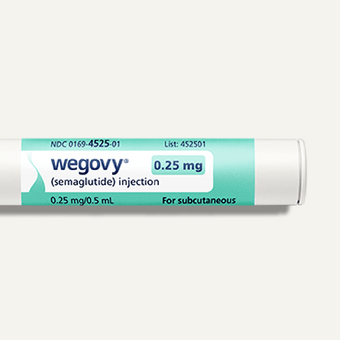
Are you truly at a therapeutic level? Many patients feel discouraged while on 2.5mg (Mounjaro) or 0.25mg/0.5mg (Wegovy).
It is vital to remember that these are sub-therapeutic doses designed only to prepare your gut for the medication.
Most "non-responders" find their breakthrough once they reach the higher levels (10mg/15mg for Mounjaro or 1.7mg/2.4mg for Wegovy). If you haven't reached the maximum dose yet, you haven't yet seen what the medication can truly do for your biology.
2. Focus on "Mechanical" Satiety
GLP-1s are masters at managing hormonal hunger, but they cannot entirely eliminate "head hunger" or habitual eating.
If the medication has quietened your physical cravings but you are still eating because it is "dinner time," because you are stressed, or because you are bored, you may not be achieving the necessary calorie deficit.
To combat this, focus on Mechanical Satiety:
- Fibre: Foods like lentils, broccoli, and chia seeds physically distend the stomach, sending a neural signal of fullness that works in tandem with the medication.
- Protein: Protein triggers the release of your own natural satiety hormones, providing a "second layer" of fullness.
3. Consider Switching Medications
Biology is individual. Because Mounjaro (Tirzepatide) targets two receptors (GLP-1 and GIP) while Wegovy (Semaglutide) targets only one, some patients who see no results on semaglutide experience significant success when switching to the dual-agonist approach.
The GIP component in Mounjaro may help improve fat metabolism in a way that semaglutide alone does not for certain genetic profiles.
4. The "Rule of Three" Check
Ask yourself if you are hitting these three foundational pillars that allow the medication to work:
- Sleep: Getting less than 7 hours of sleep increases ghrelin (hunger) and decreases leptin (fullness). It also spikes cortisol, which tells your body to store fat.
- Strength: Are you moving? Muscle is metabolically "expensive" tissue. The more muscle you have, the higher your resting metabolic rate. Without some form of resistance training, your metabolism may slow down too much during weight loss.
- Stress: High stress levels can chemically override the appetite-suppressing effects of the medication through the production of neuropeptide Y.
The Bottom Line
If you have reached the maximum dose and followed a structured lifestyle plan for 16 weeks without seeing at least a 5% drop in weight, it is time for a deeper clinical review.
At Cloud Pharmacy, our prescribers can help you investigate underlying thyroid issues, adjust your dosing schedule, or discuss alternative treatments.
Not every tool works for every person, but with the current pace of medical advancement, there is almost always another path to explore.
The "pause" you are experiencing isn't the end of the road - it's just a sign that we need to adjust the map.