











GLP-1 vs Dual GIP/GLP-1 Medicines Explained

Updated 13th September 2026
If you have been reading about weight management medicines for any length of time, you will have hit the phrase "dual agonist" and quietly moved past it. It sounds like a technical detail for pharmacologists. It is actually the single clearest dividing line between the two main options, and it explains a surprising amount: why the dose schedules differ, why the NHS treats them differently, and why a prescriber might choose one over the other for the same person.
The short version is that one type of medicine copies a single gut hormone, and the other copies two. Everything else follows from that.
This guide sets out what each type is, what the SmPCs and NICE appraisals actually say about them, and how the choice is made in practice.
The short version is that one type of medicine copies a single gut hormone, and the other copies two. Everything else follows from that.
This guide sets out what each type is, what the SmPCs and NICE appraisals actually say about them, and how the choice is made in practice.
What a GLP-1 receptor agonist is
Glucagon-like peptide-1 is an incretin hormone released by your intestine after you eat. It tells the pancreas to release insulin when glucose is rising, slows the rate the stomach empties, and signals fullness to the brain. Natural GLP-1 lasts minutes before being broken down.
A GLP-1 receptor agonist is a molecule engineered to bind the same receptor and resist that breakdown. Two are licensed in the UK for weight management.
Semaglutide, in its weight management formulation, is given once weekly and escalated in four-week steps through 0.25 mg, 0.5 mg, 1 mg and 1.7 mg to a maintenance dose of 2.4 mg.1 It is indicated as an adjunct to a reduced-calorie diet and increased physical activity for adults with an initial BMI of 30 kg/m² or above, or 27 to under 30 kg/m² with at least one weight-related comorbidity.1
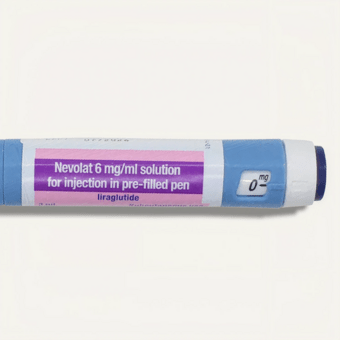
Liraglutide binds the same receptor but has a much shorter duration of action, so it is a daily injection rather than a weekly one, titrated in 0.6 mg steps at weekly intervals to 3.0 mg.3
A GLP-1 receptor agonist is a molecule engineered to bind the same receptor and resist that breakdown. Two are licensed in the UK for weight management.
Semaglutide, in its weight management formulation, is given once weekly and escalated in four-week steps through 0.25 mg, 0.5 mg, 1 mg and 1.7 mg to a maintenance dose of 2.4 mg.1 It is indicated as an adjunct to a reduced-calorie diet and increased physical activity for adults with an initial BMI of 30 kg/m² or above, or 27 to under 30 kg/m² with at least one weight-related comorbidity.1
Liraglutide binds the same receptor but has a much shorter duration of action, so it is a daily injection rather than a weekly one, titrated in 0.6 mg steps at weekly intervals to 3.0 mg.3
What a dual GIP/GLP-1 agonist is
Glucose-dependent insulinotropic polypeptide, or GIP, is the other major incretin. It is released from a different part of the intestine, and for a long time it was thought to be the less interesting of the two for weight management.
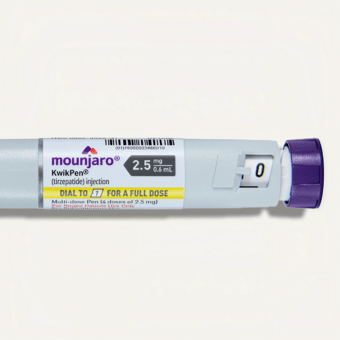
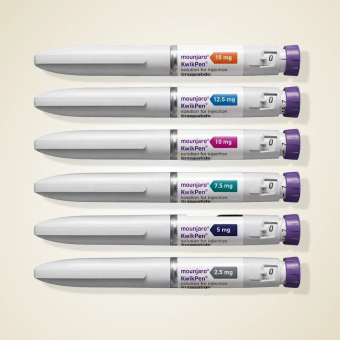
Tirzepatide acts on both receptors.2 It is given once weekly, starting at 2.5 mg, moving to 5 mg after four weeks, then increasing in 2.5 mg steps at intervals of at least four weeks to a maximum of 15 mg.2 Its licensed weight management indication mirrors the semaglutide one: an initial BMI of 30 kg/m² or above, or 27 to under 30 kg/m² with at least one weight-related comorbidity such as hypertension, dyslipidaemia, obstructive sleep apnoea, cardiovascular disease, prediabetes or type 2 diabetes.2
The GIP component is why the medicine sits in a different category on paper. What that second receptor contributes is an area where the evidence is still developing, and it is worth being straightforward about that rather than filling the gap with confident-sounding mechanism. Cloud's guide to how GLP-1 and GIP medications actually work covers what is currently understood.
Tirzepatide acts on both receptors.2 It is given once weekly, starting at 2.5 mg, moving to 5 mg after four weeks, then increasing in 2.5 mg steps at intervals of at least four weeks to a maximum of 15 mg.2 Its licensed weight management indication mirrors the semaglutide one: an initial BMI of 30 kg/m² or above, or 27 to under 30 kg/m² with at least one weight-related comorbidity such as hypertension, dyslipidaemia, obstructive sleep apnoea, cardiovascular disease, prediabetes or type 2 diabetes.2
The GIP component is why the medicine sits in a different category on paper. What that second receptor contributes is an area where the evidence is still developing, and it is worth being straightforward about that rather than filling the gap with confident-sounding mechanism. Cloud's guide to how GLP-1 and GIP medications actually work covers what is currently understood.
How they compare on the things you can actually check
The most reliable comparison is between the two SmPCs, because those are regulatory documents describing the same categories of information for each product.
Two rows in that table do more practical work than the rest.
The oral contraceptive row is the one most often missed. Tirzepatide is the only medicine in this class found to reduce the effect of oral contraceptives, which is why the four-week non-oral or barrier advice applies on starting and after every dose increase.7 The GLP-1 receptor agonists do not carry this advice.7 If you use oral contraception, this difference may matter more to you than anything about receptor pharmacology.
The NHS setting row is the other. Semaglutide is recommended only within a specialist weight management service; tirzepatide can be prescribed in primary care.54 For many people that difference determines what is realistically available, regardless of which they would prefer.
Considering treatment for weight management? You can start an assessment with a Cloud Pharmacy clinician, who will review your medical history and confirm whether treatment is appropriate.
| Semaglutide (GLP-1) | Tirzepatide (dual GIP/GLP-1) | Liraglutide (GLP-1) | |
|---|---|---|---|
| Receptors | GLP-11 | GIP and GLP-12 | GLP-13 |
| Frequency | Once weekly1 | Once weekly2 | Once daily3 |
| Dose steps | 0.25, 0.5, 1, 1.7, 2.4 mg at 4-week intervals1 | 2.5 mg, then 5 mg at 4 weeks, then 2.5 mg steps at intervals of at least 4 weeks, max 15 mg2 | 0.6 mg steps weekly to 3.0 mg3 |
| Missed-dose window | Within 5 days1 | Within 4 days, minimum 3 days between doses2 | Daily dosing, see SmPC3 |
| Oral contraceptive advice | No specific advice7 | Non-oral or barrier method for 4 weeks on starting and after each dose increase27 | No specific advice7 |
| Stop before planned pregnancy | At least 2 months1 | At least 1 month2 | See SmPC, not for use in pregnancy3 |
| NHS setting | Specialist weight management service only5 | Primary care or specialist service4 | Secondary care specialist service8 |
The oral contraceptive row is the one most often missed. Tirzepatide is the only medicine in this class found to reduce the effect of oral contraceptives, which is why the four-week non-oral or barrier advice applies on starting and after every dose increase.7 The GLP-1 receptor agonists do not carry this advice.7 If you use oral contraception, this difference may matter more to you than anything about receptor pharmacology.
The NHS setting row is the other. Semaglutide is recommended only within a specialist weight management service; tirzepatide can be prescribed in primary care.54 For many people that difference determines what is realistically available, regardless of which they would prefer.
Considering treatment for weight management? You can start an assessment with a Cloud Pharmacy clinician, who will review your medical history and confirm whether treatment is appropriate.
Differences in side effects
The side-effect profiles overlap heavily, because both act on the GLP-1 receptor and most of the common effects come from delayed gastric emptying.
Nausea, diarrhoea, vomiting and constipation are very common for both, meaning at least one in ten people.12 The semaglutide SmPC quantifies them: nausea 43.9%, diarrhoea 29.7%, vomiting 24.5%, constipation 24.2%.1 The tirzepatide SmPC lists the same four as very common, adding abdominal pain, and notes that reactions were mostly mild to moderate, with incidence higher during dose escalation and declining over time.2
The serious warnings are also broadly shared: acute pancreatitis, gallbladder disease, dehydration with a risk of acute renal impairment, hypoglycaemia when combined with a sulfonylurea or insulin, and caution in diabetic retinopathy.12 The tirzepatide SmPC states that acute pancreatitis has been reported, including necrotising pancreatitis and reports with a fatal outcome, and advises stopping if it is suspected.2
There are a few product-specific points. Semaglutide is associated with a mean heart rate increase of around 3 beats per minute.1 Liraglutide carries specific warnings about thyroid C-cell tumours seen in preclinical studies and about discontinuing if a clinically relevant sustained heart rate increase occurs.3
For a fuller treatment of what to expect and when to act, Cloud's guide on managing nausea, bloating and constipation is the practical companion to this one.
Nausea, diarrhoea, vomiting and constipation are very common for both, meaning at least one in ten people.12 The semaglutide SmPC quantifies them: nausea 43.9%, diarrhoea 29.7%, vomiting 24.5%, constipation 24.2%.1 The tirzepatide SmPC lists the same four as very common, adding abdominal pain, and notes that reactions were mostly mild to moderate, with incidence higher during dose escalation and declining over time.2
The serious warnings are also broadly shared: acute pancreatitis, gallbladder disease, dehydration with a risk of acute renal impairment, hypoglycaemia when combined with a sulfonylurea or insulin, and caution in diabetic retinopathy.12 The tirzepatide SmPC states that acute pancreatitis has been reported, including necrotising pancreatitis and reports with a fatal outcome, and advises stopping if it is suspected.2
There are a few product-specific points. Semaglutide is associated with a mean heart rate increase of around 3 beats per minute.1 Liraglutide carries specific warnings about thyroid C-cell tumours seen in preclinical studies and about discontinuing if a clinically relevant sustained heart rate increase occurs.3
For a fuller treatment of what to expect and when to act, Cloud's guide on managing nausea, bloating and constipation is the practical companion to this one.
What the evidence comparison actually shows
This is the part people most want a verdict on, and it is the part where the honest answer needs qualifying.
In its appraisal of tirzepatide, NICE's committee recorded that clinical trial evidence suggests tirzepatide with diet and exercise support is more effective than diet and exercise support alone, and that indirect comparisons suggest it is more effective than semaglutide alongside diet and exercise support.4 That is a NICE statement, not a marketing one, and it belongs in an honest comparison.
It also needs its caveat stated in the same breath. An indirect comparison infers a difference between two medicines from separate trials rather than from a trial that gave both to comparable people at the same time. It is a weaker basis for a conclusion than a head-to-head study, and NICE describes it as an indirect comparison for exactly that reason.4
More importantly, an average difference across a trial population does not tell you what will happen for one person. Tolerability, other conditions, other medicines, dosing schedule and access all feed into the outcome for an individual, and none of them appear in a population average. Which is why the decision does not get made from this paragraph.
In its appraisal of tirzepatide, NICE's committee recorded that clinical trial evidence suggests tirzepatide with diet and exercise support is more effective than diet and exercise support alone, and that indirect comparisons suggest it is more effective than semaglutide alongside diet and exercise support.4 That is a NICE statement, not a marketing one, and it belongs in an honest comparison.
It also needs its caveat stated in the same breath. An indirect comparison infers a difference between two medicines from separate trials rather than from a trial that gave both to comparable people at the same time. It is a weaker basis for a conclusion than a head-to-head study, and NICE describes it as an indirect comparison for exactly that reason.4
More importantly, an average difference across a trial population does not tell you what will happen for one person. Tolerability, other conditions, other medicines, dosing schedule and access all feed into the outcome for an individual, and none of them appear in a population average. Which is why the decision does not get made from this paragraph.
How a prescriber actually decides
In practice the choice turns on a handful of concrete questions rather than on which medicine performed better in a trial.
What are the NHS criteria you meet, if you are going that route? Tirzepatide requires an initial BMI of at least 35 with at least one weight-related comorbidity, and NHS England is introducing it in phases.4 Semaglutide requires at least one comorbidity with a BMI of at least 35, or 30 to 34.9 with specialist referral criteria met, and is capped at two years within a specialist service.5 For all three medicines, NICE advises lower BMI thresholds, usually reduced by 2.5 kg/m², for people from South Asian, Chinese, other Asian, Middle Eastern, Black African or African-Caribbean ethnic backgrounds.6
What else are you taking? Oral contraception points away from tirzepatide unless the four-week barrier advice is workable for you.7 Insulin or a sulfonylurea means doses will need reviewing at initiation whichever medicine is chosen.2
Are you planning a pregnancy? The lead times differ: at least two months before a planned pregnancy for semaglutide, at least one month for tirzepatide.12
Weekly or daily? Liraglutide is a daily injection; the other two are weekly.312 For some people that is decisive in both directions.
How have you tolerated things before? Someone with a history of significant gastrointestinal problems, or a history of pancreatitis, is a different conversation from someone without.
NICE's framing sits underneath all of it: medicines are considered after dietary, exercise and behavioural approaches have been started and evaluated, and all of them are used alongside a reduced-calorie diet and increased physical activity.6 The NHS puts the practical target at steady change of 0.5 to 1 kg, or 1 to 2 lb, a week.9
What are the NHS criteria you meet, if you are going that route? Tirzepatide requires an initial BMI of at least 35 with at least one weight-related comorbidity, and NHS England is introducing it in phases.4 Semaglutide requires at least one comorbidity with a BMI of at least 35, or 30 to 34.9 with specialist referral criteria met, and is capped at two years within a specialist service.5 For all three medicines, NICE advises lower BMI thresholds, usually reduced by 2.5 kg/m², for people from South Asian, Chinese, other Asian, Middle Eastern, Black African or African-Caribbean ethnic backgrounds.6
What else are you taking? Oral contraception points away from tirzepatide unless the four-week barrier advice is workable for you.7 Insulin or a sulfonylurea means doses will need reviewing at initiation whichever medicine is chosen.2
Are you planning a pregnancy? The lead times differ: at least two months before a planned pregnancy for semaglutide, at least one month for tirzepatide.12
Weekly or daily? Liraglutide is a daily injection; the other two are weekly.312 For some people that is decisive in both directions.
How have you tolerated things before? Someone with a history of significant gastrointestinal problems, or a history of pancreatitis, is a different conversation from someone without.
NICE's framing sits underneath all of it: medicines are considered after dietary, exercise and behavioural approaches have been started and evaluated, and all of them are used alongside a reduced-calorie diet and increased physical activity.6 The NHS puts the practical target at steady change of 0.5 to 1 kg, or 1 to 2 lb, a week.9
Common questions
Is a dual agonist automatically better than a GLP-1 medicine?
No, and the question does not really have a general answer. NICE recorded that indirect comparisons suggest greater effect for tirzepatide in the trial populations appraised, with the caveat that indirect comparison is a weaker form of evidence than a head-to-head trial.4 What decides the right medicine for a person is their criteria, their other conditions, their other medicines, their tolerance and what they can actually access. Those are individual factors and they are assessed in a consultation.Do I get more side effects with the dual agonist?
The very common gastrointestinal reactions are the same four for both, and both SmPCs describe them as mostly mild to moderate and concentrated around dose increases.12 There is no basis in the SmPCs for saying one is straightforwardly gentler. Individual tolerance varies a great deal, which is why titration exists and why review appointments are part of the plan rather than an optional extra.Can I switch from one to the other?
Switching does happen, but it is a prescriber's decision and needs planning rather than improvising. The medicines have different half-lives, different starting doses and different titration schedules, so the switch point and the starting dose on the new medicine both need setting deliberately. Raise it at a review appointment.Does the GIP part mean it works on fat differently?
The GIP receptor is thought to have a role in how the body handles lipids, and it may also moderate some of the nausea associated with GLP-1 activity. The evidence on precisely what GIP contributes in a dual-agonist setting is still developing, and it is more honest to say that than to describe a mechanism with more confidence than the literature supports.Where can I read the full product information?
The Summary of Product Characteristics for each medicine is published on the electronic Medicines Compendium and is the regulatory source for everything in this guide: semaglutide and tirzepatide both have dedicated Cloud guides that reference their SmPCs section by section, and your prescriber or pharmacist can talk you through the sections that apply to you.The next step
If you are weighing these two options, the most useful thing you can do before any appointment is write down three things: your current medicines including anything over the counter, whether you use oral contraception, and whether a pregnancy is planned in the next year. Those three answers narrow the choice faster than any comparison of receptor mechanisms. Then take them to your GP, or start an assessment with a Cloud Pharmacy clinician who can work through the criteria with you.
Important information
This guide is for general information only and does not constitute medical advice, diagnosis or treatment. The information here describes general clinical context based on UK regulatory sources cited above; it is not a recommendation for any specific medicine or treatment, which can only be made by a prescriber following individual assessment.
If you are considering treatment, speak to your GP or pharmacist, or arrange a consultation with a Cloud Pharmacy clinician. Prescription-only medicines are issued only after clinical assessment and where appropriate.
If you experience side effects from any medicine, you can report them through the Yellow Card scheme at yellowcard.mhra.gov.uk.
References used in this guide:
If you are considering treatment, speak to your GP or pharmacist, or arrange a consultation with a Cloud Pharmacy clinician. Prescription-only medicines are issued only after clinical assessment and where appropriate.
If you experience side effects from any medicine, you can report them through the Yellow Card scheme at yellowcard.mhra.gov.uk.
References used in this guide:
- Source: electronic Medicines Compendium (medicines.org.uk).
- Contains public sector information licensed under the Open Government Licence v3.0.
- Source: NHS Specialist Pharmacy Service (sps.nhs.uk).
- Source: NHS website (nhs.uk).
References
- Wegovy (semaglutide) 2.4 mg SmPC
- Mounjaro (tirzepatide) SmPC
- Saxenda (liraglutide) 6 mg/ml SmPC
- NICE TA1026, Tirzepatide for managing overweight and obesity
- NICE TA875, Semaglutide for managing overweight and obesity
- NICE NG246, medicines and surgery
- NHS Specialist Pharmacy Service, considerations and interactions with GLP-1 receptor agonists
- NICE TA664, Liraglutide for managing overweight and obesity
- NHS, Obesity, treatment

Fahmida Kadir
Deputy Superintendent Pharmacist
Start Your Free Consultation
Complete our online questionnaire so our clinical team can check eligibility for the desired treatment.
- Takes less than 5 minutes to complete
- Reviewed by our UK-based medical team
- Approved treatments dispatched same day (before 3pm)

Review Date13 September 2026
Next Review13 September 2027
Published On13 September 2026
Last Update13 September 2026
Related guides
Am I Eligible
Am I Eligible for Mounjaro?
What you can establish yourself before a consultation, what only a clinician can determine, and why a service that approves you instantly has...
Read more ›Age Limits for
Age Limits for Weight Loss Medication in the UK
What each UK weight management medicine says about minimum age, adolescents, older adults and where the data runs out, drawn from the SmPCs and...
Read more ›GLP-1 Medicines and Muscle Loss
GLP-1 Medicines and Muscle Loss: Protecting Lean Mass
What trial body-composition data shows about lean mass during weight loss on GLP-1 and dual GIP/GLP-1 treatment, why it matters, and what the...
Read more ›Related treatments
Clinically proven, pharmacist-reviewed weight loss treatments.